

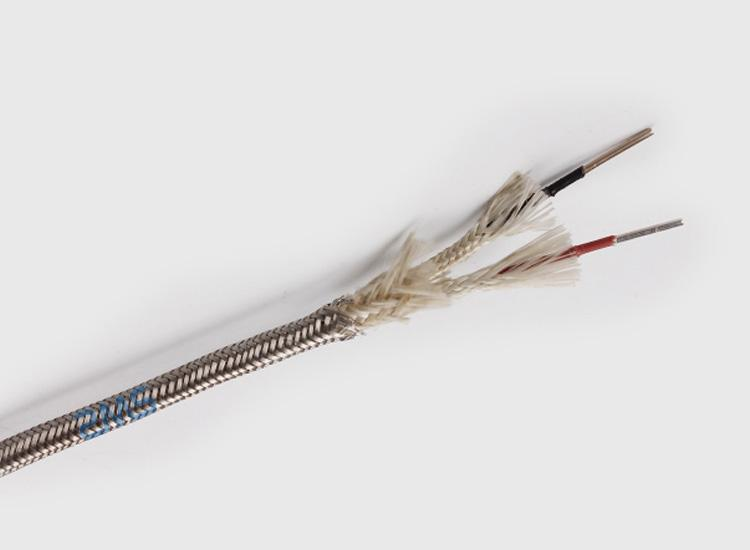
Accuracy in temperature measurement can be determined by such a mundane aspect as the cable linking the sensor to the control unit. Although thermocouple cables might be deemed as basic, they are an important aspect in the industry that helps industries that need precise measurements in order to keep the signal intact. The market of thermocouple temperature-sensing systems worldwide is projected to reach USD 10.05 billion by 2030 and will increase at the pace of 7.7% CAGR. This consistent increase indicates that sectors such as manufacturing, energy, and aerospace still appreciate accuracy and consistency.
The quality of thermocouple cables is even more critical as industrial systems develop. Further on, we will discuss what makes these cables so reliable, the way in which the materials used influence the performance, and why the choice of these cables can be the difference between flawless performance with a high degree of reliability and accuracy and poor performance resulting in no reliability at all.
What Lies Beneath the Reliability of Industrial Measurements?
Cables of thermocouples are the essential connectors between the thermocouple sensor and the measuring device. Any interference or distortion of this transmission will cause a wrong reading, which the industries cannot risk when dealing with high temperatures or delicate materials. These cables are fashioned from metals that are thermocouple-type compatible, such that they have a minimum voltage difference and constant performance.
In manufacturing such industrial items as planes, glass, and electricity, the error of a few percentage points in the measurements may lead to inefficiency or the breakdown of machinery. Thermocouple cables are strong, as they are capable of sending signals over a long distance without losing their accuracy. The composition of materials, insulation, and shielding is all aimed towards the same purpose, which is to provide reliable and reliable data.
What Features Make Thermocouple Cables Truly Reliable?
- Temperature Resistance: Thermocouple cables are designed to operate in cryogenic temperatures up to above 1000°C, depending on the type.
- Electrical Stability: All metals with high purities have reduced signal drift and volatility.
- Insulation Strength: Teflon, fiberglass, and ceramic are such materials that protect against abrasion, moisture, and heat.
- Chemical Resistance: In the industries where there is a chance of exposure to corrosive gases or fluids, the protective sheathing is used to ensure that the metals are not deteriorated.
- Mechanical Flexibility: The flexible designs can be installed in tight or vibratory spaces without loss of integrity.
What are the effects of construction materials on the cable performance?
A thermocouple, among other cables, is composed of a length of material that defines a long life and, at the same time, the accuracy of data that it conveys. The transfer of thermal voltage is done with the use of alloy conductors such as Chromel, Alumel, or Constantan.
Depending on the need, Teflon is good in high chemical resistance, whereas fiberglass is good in high temperature stability, and PVC is good as a general-purpose insulation. Cables with metal-braided or mineral insulation, such as thermocouples, have better protection in extreme environments such as steel plants or refineries. The attentive matching of conductor and insulation enables such cables to serve properly in a variety of industries, such as clean laboratories or toxic furnaces.
What Are the Common Challenges with Thermocouple Cables—and How Are They Solved?
- Signal Interference: When given proper shielding, the electromagnetic noise in the heavy machinery areas is reduced.
- Thermal Drift: Cable Matching and Calibration. When correctly coordinated, cables do not have time-dependent, inaccurate readings.
- Mechanical Stress: When installing the cable and when on the move, flexible sheathing and strain reliefs protect the cable.
- Environmental Exposure: Performance protection through the use of moistureproof and corrosion-resistant materials is used.
- Connector Quality: Connector errors and voltage loss have been reduced through a connector design founded on a secure and oxidation-free connector.
How would you select an appropriate thermocouple cable to use?
- Proper Thermocouple Type: Each cable must be paired with a thermocouple grade (e.g., Type K, J, or T) to generate the appropriate voltage.
- Environmental Fit: Cables should be capable of enduring the stress that is peculiar to his service, heat, vibration, or corrosion.
- Length and Signal Integrity: The longer the cables are, the better shielding they need to be in order to avoid voltage loss.
- Calibration and Maintenance: The periodical testing is to guarantee further reliability of data transmission.
- Standards of Compliance: It follows international standards like IEC 60584 or ASTM E230 without any harm or inappropriate way.
Trustworthy Relationship between Accuracy and Productivity
At the threshold of the noisy environment of an industrial setting, the thermocouple cables are the silent workers of temperature control, reliable, precise, and capable of operation in the very severe conditions of an industrial facility. Their resistance to wear and tear, strength of material, and design flexibility make them vital in keeping a steady flow of business in sectors where even slight inconsistency may cause a huge turnover.In the case of industries that are interested in the prospect of achieving sustainable performance and data quality, the consideration of partnering with such professionals as Tempses Tempses may be a prudent move. Their utilitarian attitude towards effective temperature control and their emphasis on quality materials are manifestations of how the thermocouple systems can keep on improving in order to match the accuracy and attainment requirements of the modern industrial settings.
