

Introduction: The Invisible Wardrobe Method for Modern Homes
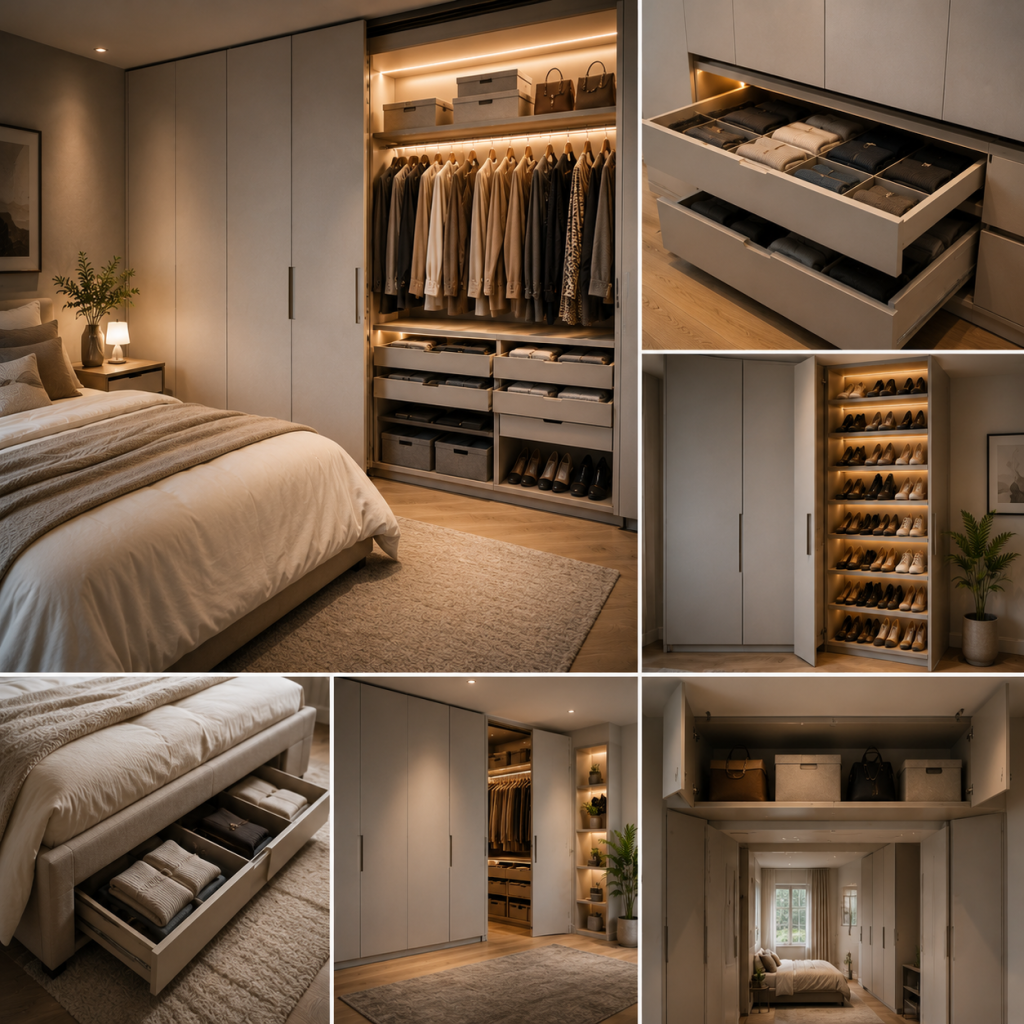
If you own a lot of clothes, you already know the tension. You want to keep everything, but you also want a bedroom that feels calm to walk into after a long day. Turns out you can do both. Storing more than a hundred outfits and a couple dozen shoe pairs without the room ever looking crowded is genuinely possible, it just takes a different approach than buying a bigger cupboard and hoping.
The real answer is hidden storage. Layouts built so volume disappears instead of getting displayed. Think vertical space, drawer systems, enclosed shelving, not open racks and visible stacks on a chair. A room can hold an enormous amount of clothing and still look uncluttered, provided the storage behind it was actually planned rather than just accumulated.
There’s a payoff beyond appearances too. A room full of visible clothing piles creates a low hum of stress every time you walk in, whether you clock it consciously or not. A room where everything has a concealed home feels calmer almost right away, and finding what you actually want to wear stops being a ten-minute dig through a pile.
Maximizing Your Hidden Space to Organize a Small Closet
The single best upgrade for a small closet, hands down, is a second hanging rod. Splitting the vertical space roughly doubles your hanging capacity for shirts, jackets, folded trousers, and it works in almost any closet with a standard ceiling height. No renovation needed. Just smarter use of the height that’s already there.
Hangers matter more than people give them credit for. Bulky plastic ones waste horizontal space, and clothes slide right off. Slim, non-slip velvet hangers take up a fraction of the width and hold garments in place, which frees up several extra inches on a typical rod. Small swap, real difference.
For things you only need occasionally, overhead bins solve the dead space above the rod. Matching canvas boxes keep the top shelf looking tidy while holding out-of-season clothes you’re not reaching for on a random weekday.
Solving Shared Space Agony with Smart Wardrobe Zoning
Couples sharing one closet hit the same wall every time. Splitting the space into equal left and right zones from the start kills most of the ongoing arguments about whose clothes have taken over whose side.
Doors matter more in shared closets than solo ones. Swinging doors need clearance to open fully, which becomes an actual problem in a smaller room when two people are getting ready at once. Sliding tracks keep the path clear no matter who’s using the closet at that moment.
Internal drawer units built into the cabinet frame give each person a spot for smaller items, underwear, accessories, without needing separate dressers eating up more floor space. This division works especially well inside a wooden wardrobe design for clothes that already comes with modular internal fittings rather than one big open hanging cavity.
Concealing Massive Footwear Collections in a Hidden Shoe Rack
Shoes are the hardest category to store neatly, mostly because of how many shapes and heights they come in. Pull-out slanted shelving fixes that by letting dozens of pairs sit tiered behind closed doors, only visible when you actually slide the tray open.
Clear drop-front boxes work well for shoes you wear less often. Stack them at the base of the closet and your pairs stay dust-free, while you can still spot the right one without opening every box on the shelf.
Bench seating is one of the more underused options here. A wooden shoe rack with doors built into a bench base gives you somewhere to sit while putting shoes on, plus enclosed storage that keeps the whole collection out of sight entirely.
Professional Folding and Culling Hacks for High Volume Storage
Even great storage furniture has a ceiling, and folding technique stretches what a drawer can actually hold. Filing t-shirts vertically, so each one stands upright like a book, lets you see everything at a glance while fitting noticeably more into the same space than the old stacking method ever managed.
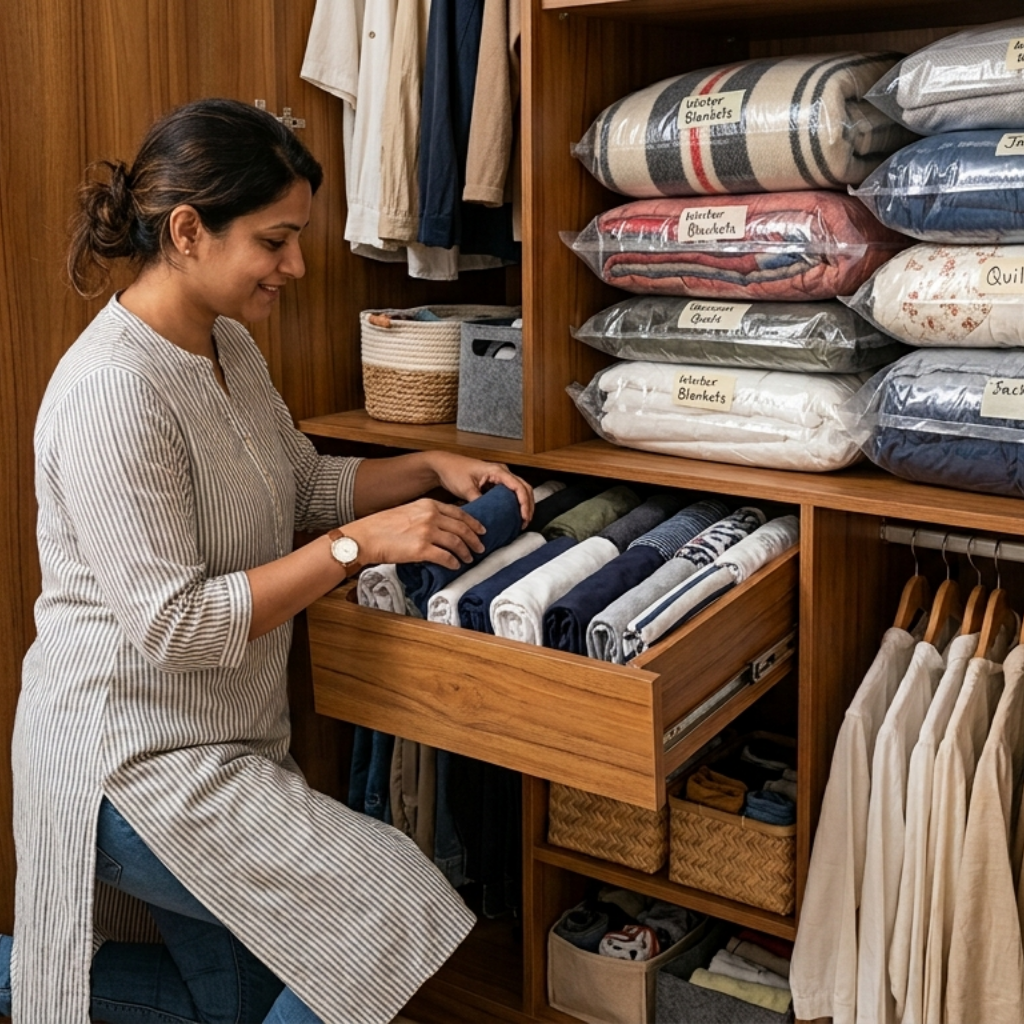
Bulky winter items, coats, blankets, take up space way out of proportion to how often they get used. Vacuum sealing compresses them down to a fraction of their size, freeing up entire shelves through the months you’re not touching them.
Keeping the volume manageable long-term comes down to one habit most people skip: one in, one out, for every new purchase. Skip that rule and even the most carefully organized closet drifts back toward overflow within a year or two. It always does, eventually.
Conclusion: Embracing the Freedom of Visual Minimalism
Before buying anything new, walk your current layout first. Look for unused wall space, awkward corners, shelves not pulling their weight. More often than not, the capacity you need already exists in the room. It just needs rearranging.
The daily payoff shows up fast. Mornings move quicker once everything has a defined place, and deciding what to wear stops being a chore when your options are visible and sorted instead of buried under a pile from last Tuesday.
Long term, a bedroom that hides its storage well tends to feel calmer simply because there’s less for the eye to process. That kind of quiet, uncluttered space is worth the planning it takes, and more often than not, it doesn’t need more square footage at all. Just a smarter use of what’s already there.
