

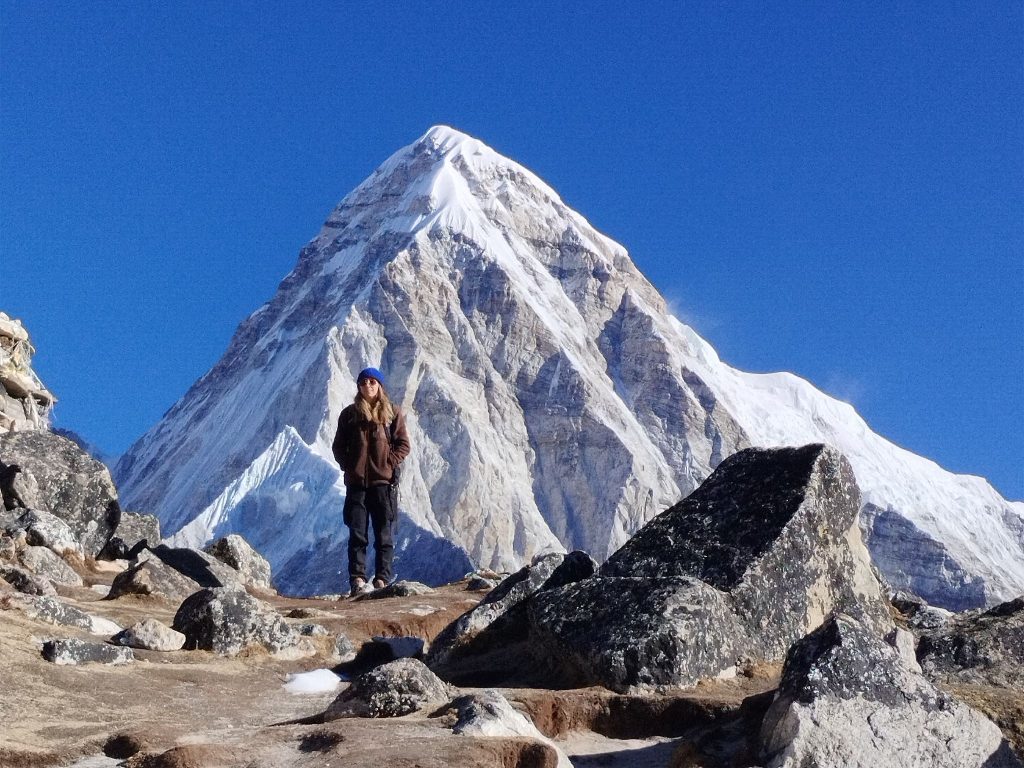
Everest Base Camp, one of the world’s most classic adventures, is perfect for embarking on a journey to discover different aspects of oneself. It is an amazing combination of natural beauty and cultural diversity can experience in the high-altitude Himalayan lifestyle.
In addition to the breathtaking vistas of Mount Everest and other nearby peaks, the trek is filled with fascinating facts about the centuries-old monasteries, Sherpa culture, rare wildlife, and diverse landscapes that challenge both spirit and endurance.
When it comes to Everest Base Camp, most people think it is a trip to reach the base of Mount Everest by walking for 10-12 days just to witness the tallest mountain.
However, the trip is more than just viewing the mountains and a hike; it is an educational exploration of the Himalayas’ wonders. It offers excellent opportunities to cover fascinating facts about the region’s traditions, geography, and history.
The journey is akin to crossing a threshold between two worlds. On one side, the place consists of villages, forests, monasteries, and prayer wheels that throb with the spirit of humans. On the other side, it starts with a silent realm of ice, rock, and sky where only the daring can travel.
Reaching a landmark at 5,364 m is the one aspect of the trek to Base Camp, whereas the other one is walking a path where the norms of everyday life slowly become less applicable.
The air becomes thinner, the temperature drops, and the scenery changes as you ascend to higher terrain. This feels like every step is on the raw, untamed, and isolated side of Earth.
Furthermore, the trip allowed trekkers to walk in the footsteps of legendary mountaineers. Reaching Everest Base Camp as a trekker and leaving as someone who has stood at the gateway to the world’s highest peak is more of a transformation than a destination.
Location & Altitude
A popular adventure in the mountains, the Everest Base Camp, takes trekkers to the base of Mount Everest at an elevation of 5,364 m (17,598 ft). It is situated in the Khumbu region of the southern side of Nepal and is preserved within the area of Sagarmatha National Park.
The hike usually starts with an exhilarating flight into Lukla (2,840 m/9,318 ft) and continues for 12-14 days as a base camp trek, passing through diverse landscapes.
Although the Everest ranges can be seen from base camp, it is better to hike all the way up to Kala Patthar (5,555 m/18,225 ft) to get the panoramic and clear views of Mount Everest (8,848 m / 29,029 ft).
Kala Patthar is a rocky but spectacular viewpoint that offers stunning sunrise and sunset vistas in addition to close-up views of the surrounding mountains.
Trekking Experience
The trek meanders its way up through Sagarmatha National Park, which is also listed as a UNESCO World Heritage Site. This place is renowned for its breathtaking Himalayan landscapes and rich biodiversity.
Trekkers pass through pine forests, desert uplands, suspension bridges, glacial moraines, and roaring rivers on their way. Acclimatization is crucial because the oxygen level drops to about 50% below sea level at higher altitudes.
Even though it is a remote place, trekkers are often surprised to see the facilities like Wi-Fi connection, coffee shops, and bakeries in several teahouses along the trial.
Adventure & Challenges
The journey to EBC is an adventure, starting with thrilling flights in one of the world’s dangerous airports, Lukla. The airport is short and bumpy with steep hills on both sides.
The temperature is widely fluctuating, plunging below -10°C (14°F) at high altitude, so that the night becomes cold whereas pleasant and sunny during the day.
This trip requires both preparation and stamina, but the feeling of accomplishment upon reaching Base Camp is remarkable.
Cultural Highlights
The journey rewards with an immersion into Sherpa Culture and Tibetan Buddhism, making it more than just a trek. Trekkers traverse charming Sherpa villages that are surrounded by colourful prayer flags, monasteries, and mani walls (stone carvings) along the route.
Tengboche Monastery, place against the backdrop of Everest and Ama Dablam, is the highest spiritual place of the region. Located at an elevation of 3,867m (12,687ft), this monastery holds daily prayers.
Locally, Everest is referred to as the “Sagarmatha” in Nepali, which means “Goddess of the Sky”, while Tibetans call it “Chomolungma,” meaning “Mother Goddess of the World.”
Historical Significance
The EBC trek follows a part of the path that Tenzing Norgay Sherpa and Sir Edmund Hillary took on their historic 1953 first successful summit of Everest.
It remains one of the most popular trekking trails in the world today, attracting thousands of visitors every season. Each step on the trial feels like walking in the legend’s footsteps, in a sense of connecting with the history and the climbers who have already faced the slopes of Everest.
Unique Experiences
Embarking on an EBC trek is itself a unique aspect of accomplishing the adventure. It is the opportunity to walk alongside yaks and porters, who serve as the primary means of transporting supplies to remote mountain areas.
Moreover, trekkers can experience the welcoming hospitality of the Sherpa in traditional teahouses during their stay. They serve full-course meals and shares their part of stories, which foster a sense of community.
Seasonal highlights enhance the charm of the route: in spring, Rhododendron flowers adorn the trials with petals, and in autumn, the sky is crystal-clear, and mountain vistas are unbeatable.
Local Cuisine and Tea House Culture
Trekkers are welcomed by traditional teahouses on the trekking trail that offer basic shelter for rest, along with a warm cultural experience.
These teahouses provide the local cuisine, such as dal bhat (rice and lentils), Sherpa stew, and yak cheese, which tastes like authentic Himalayan food. Additionally, having the ginger tea and butter tea helps beat off the cold.
Consuming full and healthy meals during the Everest Base Camp trek is essential to prevent sickness and gain strength. Sharing meals in those teahouses enhances the connection between locals and travellers.
Flora and Fauna of the Everest Region
The Everest Base Camp trek is an adventure that passes through the diverse landscapes of the Khumbu region. The place has unique biodiversity that enhances a natural charm, making it a trek heaven for adventure and nature lovers. Despite being a mountainous terrain, it is very rich in fauna and flora.
The route goes through lush rhododendron forests, alpine meadows, and juniper woodlands that drastically change with altitude. Trekkers can also spot the wild animals like musk deer, tahr, and even the rare snow leopard.
Fun & Fascinating Facts
The Everest Base Camp trek is not only the summiting to the top of the peak but rather an adventure trek at the altitude, which doesn’t require any technical mountaineering skills.
For most of travellers, it will be a lifetime experience in the breathtaking high-altitude landscapes with rich in natural beauty, historical importance, and cultural diversity.
Interestingly, the route offers modern facilities, especially in Namche Bazaar, where one can find bakeries serving delicious apple pies at 3,440 meters.
Conclusion
Embarking on the Everest Base Camp Journey is not only the ultimate victory; it is about getting the self-realization of a new side of yourself by tracing a route that those legends previously walked.
You come to the realization that the journey was never about touching the mountains but rather about letting the mountains touch you, as you stand among the prayer flags and glaciers, with Everest towering unseen yet ever-present.
Even though you return to your day-to-day world, the memories of the journey remain with you. The part of you stays in the valleys between the earth and sky, where the spirit feels infinite despite the thin air.
The Everest Base Camp marks a new beginning, the start of seeing the world and oneself from a higher perspective. This journey is best for a passionate explorer and wants the thrilling yet historical adventures.