

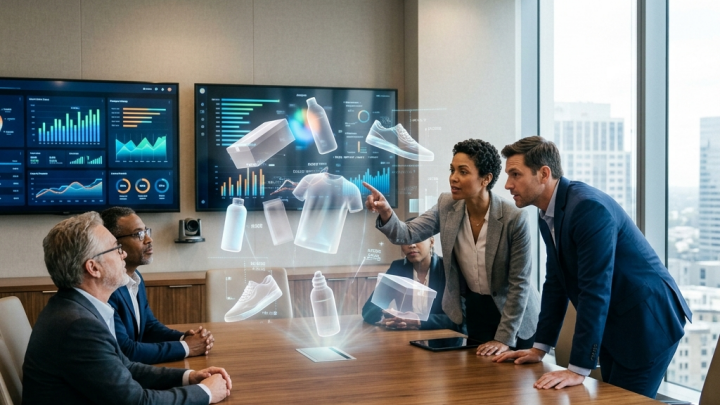
The global retail landscape is currently undergoing a structural transformation driven by spatial computing and machine learning. Historically, large corporations looking to digitize their product catalogs faced an enormous financial hurdle. Converting thousands of physical stock-keeping units (SKUs) into interactive digital assets required hiring specialized modeling agencies, managing massive render farms, and coordinating complex global logistics just to photograph items. Today, these expensive manual workflows are being rendered obsolete. Modern tech organizations are adopting advanced spatial technologies like Neural4D, which allow corporate teams to rapidly convert standard two-dimensional product photos into highly accurate, fully textured three-dimensional models at an unprecedented scale.
This massive shift in corporate technology adoption is the result of years of dedicated academic and commercial engineering. Neural4D was systematically developed by leading researchers at Nanjing University, DreamTech, Oxford University, and Fudan University. By leveraging its proprietary Spatial Sparse Attention (SSA) technology alongside the Direct3D-S2 framework, the company has introduced robust enterprise AI 3D generation solutions directly into the modern B2B ecosystem. The ability to automatically produce millimeter-accurate digital twins allows global retailers to drastically lower their visual production budgets while dramatically improving their digital consumer engagement metrics.
Restructuring the Corporate Supply Chain
The financial benefits of spatial AI extend far beyond basic marketing and e-commerce displays. For multinational corporations, the true value of 3D asset generation lies in supply chain optimization and rapid prototyping. Before a physical product ever hits a retail shelf, it must go through dozens of design iterations and factory approvals.
In a traditional manufacturing model, a brand designing a new piece of furniture must order a physical sample from an overseas factory. This sample is shipped internationally, reviewed by executives, heavily modified, and shipped back. This physical feedback loop can delay a product launch by several months and cost thousands of dollars in freight and manufacturing fees alone.
By integrating generative 3D technologies into their operations, businesses can bypass this physical friction entirely.
1. Virtual Prototyping: Product engineers can sketch a design, instantly generate a fully textured 3D model, and present it to executive boards in a virtual reality boardroom. Design changes can be made digitally and approved on the same day.
2. Reduced Photography Budgets: Corporations no longer need to fly entire production teams to remote locations for seasonal catalog shoots. A single digital twin can be placed into infinite artificially generated environments, completely eliminating the need for expensive location permits and set designers.
3. Global Standardization: When a multinational brand generates a master 3D asset, that exact digital file can be shared with regional marketing teams across the globe. This ensures absolute brand consistency whether a consumer is shopping in Tokyo, London, or New York.
Driving Consumer Confidence in Digital Retail
From a direct consumer perspective, the integration of 3D assets is rapidly becoming a baseline requirement rather than an optional luxury. The modern digital shopper is highly discerning. When purchasing expensive items online, such as luxury watches, custom furniture, or high-end electronics, flat photography fails to provide the necessary spatial context.
When a retailer implements interactive 3D viewing, the entire psychological dynamic of the transaction changes. Allowing a customer to freely rotate an item, zoom in on specific material textures, and view the product from any angle removes the uncertainty that traditionally plagues online shopping.
· Decreased Return Rates: One of the highest costs for modern e-commerce companies is reverse logistics. When consumers can physically inspect a digital twin through their browser, their expectations match the delivered reality. This alignment drastically reduces the volume of returns caused by buyer remorse or misunderstood product proportions.
· Augmented Reality Trials: Advanced enterprise AI tools export models in formats ready for mobile augmented reality. A consumer can use their smartphone camera to project a generated sofa directly into their living room before buying it. This try-before-you-buy capability directly drives conversion rates upward and builds intense brand loyalty.
“The transition to spatial retail is not merely a visual upgrade; it is a fundamental shift in how corporations manage physical assets. When a brand digitizes its entire catalog, it unlocks supply chain efficiencies and marketing capabilities that were previously impossible under legacy workflows.”
Supporting the Broader Engineering Ecosystem
While massive retail corporations are driving the commercial adoption of these tools, the underlying technology is simultaneously supporting a vibrant, open-source engineering ecosystem. The democratization of 3D modeling means that independent engineers, industrial designers, and hobbyists now possess the exact same rendering capabilities as Fortune 500 companies.
This widespread accessibility has led to a massive increase in collaborative engineering. For example, hardware designers who need specific functional parts frequently turn to collaborative platforms like the DIY3D 3D print community to source structurally verified components. Instead of modeling a standardized hinge or mounting bracket from scratch, corporate engineers and independent makers alike can download these community-tested parts and integrate them directly into their own generated models. This collaborative approach significantly accelerates the research and development phase for businesses of all sizes, proving that open ecosystems and enterprise software can coexist and mutually benefit one another.
Technical Considerations for Enterprise Adoption
For chief technology officers and corporate IT departments looking to integrate these AI pipelines, several technical hurdles must be addressed to ensure a secure and efficient rollout.
Data Security and Privacy: When an enterprise is uploading proprietary, unreleased product designs to a generative AI platform, data security is the highest priority. Enterprise solutions must provide isolated cloud environments or local processing options to guarantee that highly sensitive corporate intellectual property does not inadvertently train public data models.
System Interoperability: The generated 3D meshes must be instantly compatible with the corporation’s existing software infrastructure. Whether the assets are destined for Shopify, custom WebGL viewers, or heavy industrial CAD programs, the AI platform must support standardized export formats like GLB, USDZ, and OBJ without requiring manual file conversions.
Automated Quality Control: When processing thousands of SKUs simultaneously, human review of every single generated mesh is impossible. Enterprise systems require automated topology checks to ensure that every generated model is structurally sound, properly textured, and optimized for fast web loading.
The integration of spatial artificial intelligence into the corporate retail sector is fundamentally changing how products are designed, manufactured, and sold. By removing the financial and logistical friction associated with manual 3D modeling, these generative tools allow global businesses to operate with unprecedented agility. As consumer expectations continue to shift toward highly interactive digital experiences, the corporations that aggressively adopt and scale these AI ecosystems will secure a dominant competitive advantage in the global marketplace.