

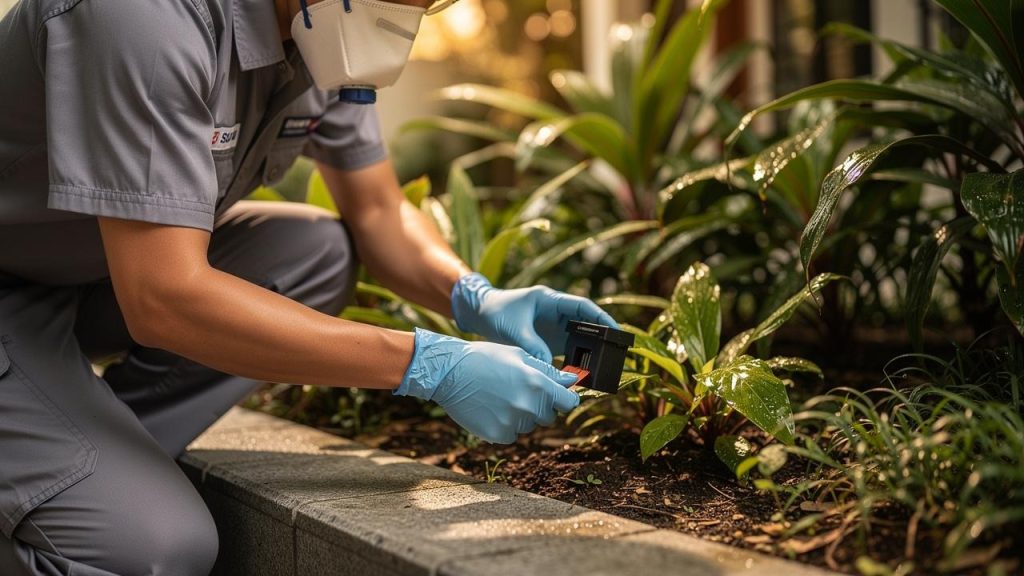
Pest control in Singapore can start at approximately S$140 for a straightforward one-off ant or cockroach treatment in an HDB flat. Bed bug and rodent programmes may cost several hundred dollars, while termite and mosquito services are commonly priced only after an inspection.
These figures are useful for early budgeting, but they are not fixed market rates. The final quotation depends on the pest species, property type, infestation severity, treatment method, access conditions and number of visits required.
Price should not be the only consideration. A low-cost treatment may provide poor value when it kills only the pests that can be seen without identifying the nest, breeding source or entry route. Some minor infestations can be handled in a single targeted visit, but termites, bed bugs, rodents and recurring cockroach activity often require monitoring and follow-up.
Singapore also regulates vector-control companies, personnel and certain pesticide products. Before engaging a provider, property owners should understand what these requirements mean, what a professional quotation should contain and why treatment methods differ from one pest to another.
Example Pest-Control Prices in Singapore
Singapore does not have an official nationwide price list for residential pest control. Providers determine their own rates based on the work required, so pricing published by one company should not be treated as a universal market average.
As one transparent reference, Aardwolf Pestkare’s published HDB pricing guide lists the following indicative figures:
| Pest or programme | Published price reference | Indicative scope |
| Ant or cockroach treatment | About S$140 | One treatment visit |
| Annual ant and cockroach plan | About S$520 | Six bi-monthly visits |
| Bed bug treatment | About S$450–S$600 | Usually two visits, depending on flat size |
| Rodent-control programme | About S$450 | Four visits over approximately four weeks |
The provider states that a general ant or cockroach treatment for an HDB flat starts at about S$140, while bed bug packages commonly range from S$450 to S$600 and a four-visit rodent programme costs approximately S$450. These are published examples from one provider rather than independently surveyed Singapore market rates.
Termite and mosquito services are more difficult to standardise. A localised drywood-termite problem affecting an accessible timber feature is very different from subterranean termite activity connected to the soil beneath a building. Similarly, mosquito treatment for a small balcony cannot be priced in the same way as a landed property with gardens, drains, gutters and multiple outdoor structures.
The most reliable quotation is therefore one that reflects the affected property and the actual extent of the infestation.
Why Pest-Control Prices Vary

Two quotations may appear similar while covering very different amounts of work. The main differences usually arise from the pest involved, the size and layout of the premises, the severity of the infestation, accessibility and the number of visits included.
Different pests require different materials, equipment and treatment schedules. Ant baiting, cockroach gel treatment, termite monitoring, rodent trapping and bed bug heat or steam treatment are not interchangeable services. A pest that remains concealed inside timber, wall voids or ceiling spaces normally requires more investigation than activity confined to an accessible surface.
Property size also affects the time required for inspection and treatment. A compact HDB flat generally takes less time to assess than a multi-storey landed home, warehouse or commercial kitchen. Larger properties usually contain more potential harbourages, including false ceilings, built-in cabinets, loading bays, gardens, floor voids and external drains.
Infestation severity is equally important. Early activity limited to one area may be relatively straightforward to manage. Once pests have spread across several rooms or structural spaces, the provider may need to use more products, install monitoring devices and return several times.
The visible number of pests does not always reveal the full extent of the problem. Termites may remain concealed inside timber, while rodents can nest above ceilings even when only a small amount of droppings is found below.
Access conditions can further affect labour and scheduling. Treatment becomes more difficult when activity is located behind fixed cabinetry, beneath flooring, within roof spaces or around equipment that cannot be moved easily. Commercial and industrial sites may also require safety inductions, permits or treatment outside normal operating hours.
The number of visits included is another major pricing factor. Rodent traps need to be checked and repositioned, termite bait stations require monitoring, and follow-up bed bug treatment may be needed after eggs hatch. A quotation that includes these return visits will naturally cost more than a basic application without monitoring or follow-up.
One-Off Treatments Versus Ongoing Programmes
A one-off treatment may be suitable when the problem is minor, isolated and connected to a source that can be corrected.
Light ant activity caused by accessible food residue may respond to targeted baiting and improved food storage. A small amount of cockroach activity around one floor trap may also be manageable if the entry route and surrounding conditions are addressed.
An ongoing programme becomes more useful when the property faces continued pest pressure. Cockroaches can travel through shared drains and refuse systems, ants may establish nests inside wall voids, and rodents can move between adjoining ceiling spaces. Removing the visible pests does not necessarily resolve these underlying sources.
Commercial properties often require scheduled pest management because food handling, deliveries, stored goods, waste disposal and customer movement create recurring risks. Service records may also be needed for internal audits, quality-control processes or operational reporting.
Before accepting a service agreement, the customer should establish which pests and areas are covered, how frequently visits will take place and whether traps, bait stations or other monitoring devices are included. The agreement should also explain whether additional visits are chargeable, what happens when the target pest remains active and what sanitation or maintenance responsibilities belong to the customer.
A low monthly fee may offer little value when the pest causing the problem is excluded or the agreement covers only routine spraying.
What a Professional Quotation Should Explain

A good quotation should describe what the provider intends to do rather than simply naming a pest and stating a price.
It should identify the target pest or explain that identification will be completed during the inspection. The quotation should also define the rooms, structures and external areas included in the service.
Treatment methods should be described in language the customer can understand. Depending on the pest, the proposed work may involve gel bait, traps, secured bait stations, targeted liquid applications, dust, heat, steam, larval control, monitoring devices or structural proofing.
The number and timing of visits should be stated clearly. When follow-up is included, the provider should explain what will be inspected, how progress will be assessed and whether further treatment is included if activity continues.
Preparation instructions are equally important. Residents may need to clear cabinet access, store food, remove pet bowls, cover aquariums, launder bedding or reduce clutter before the technician arrives.
Any warranty or service period should define the pest and treatment areas covered, the duration of the arrangement and the circumstances that qualify for a return visit. It should also explain which customer actions or untreated conditions may affect the coverage.
Promises to eliminate every pest permanently should be treated cautiously. Pests can re-enter through neighbouring units, shared building systems, deliveries and outdoor areas beyond the provider’s control. A responsible provider should explain these limitations rather than offering an unrealistic guarantee.
Singapore’s Vector-Control Requirements
Vector-control services in Singapore are regulated under the Control of Vectors and Pesticides Act.
Companies undertaking regulated vector-control work must be registered with the National Environment Agency as Vector Control Operators. Employees carrying out such work must be licensed as Vector Control Technicians or certified as Vector Control Workers. NEA advises members of the public to obtain vector-control services, including cockroach treatment, from registered operators.
These classifications refer to different parties. The Vector Control Operator is the registered business, while the technician and worker classifications apply to the personnel carrying out the work.
Consumers should therefore be cautious with expressions such as “NEA-approved pest company.” Registration does not mean that NEA recommends or endorses a particular company, nor does it guarantee the quality of every service delivered. It confirms that the operator has met the applicable registration requirements.
Before booking a treatment, customers can ask for the provider’s registered business name and confirmation that the personnel attending the property hold the appropriate licence or certification. NEA maintains a registry that members of the public can consult.
Registration of Public-Health Pesticides
Public-health pesticides and repellents intended for use against mosquitoes, flies, rodents, cockroaches and rat fleas must be registered with NEA before they can be advertised, sold or supplied in Singapore.
Registered products carry an NEA registration mark and are classified as either “For General Use” or “For Restricted Use.” General-use products may be used directly by households according to their approved labels. Restricted-use products should be handled only by registered Vector Control Operators and their licensed or certified personnel because the products may involve higher toxicity, stronger concentrations, further dilution or specialist application equipment.
Residents should avoid buying restricted professional products through unofficial online channels. A pest-control provider should be able to explain what product will be used, where it will be applied and what preparation or re-entry instructions are required.
Terms such as “green,” “natural” or “eco-friendly” should not replace specific safety information. Customers should still ask about the product, its intended use and the precautions stated on its label.
Integrated Pest Management and SS 721:2025
Singapore Standard SS 721:2025 is the Code of Practice for the Performance of Pest Management Services. It was developed by a working group co-led by NEA and the Singapore Pest Management Association, with participation from service buyers, educational institutions and other industry stakeholders.
The standard incorporates integrated pest-management principles and encourages providers to move beyond repeated chemical application. The approach prioritises prevention, risk assessment, inspection, monitoring and targeted intervention, with pesticides used judiciously where necessary.
In practice, integrated pest management may include removing food and moisture sources, improving waste handling, repairing structural entry points, installing traps or monitoring devices and applying targeted products only where they are appropriate. Results should then be reviewed so that the treatment plan can be adjusted when necessary.
SS 721:2025 is separate from Vector Control Operator registration. Registration determines whether a company may legally undertake regulated work, while the standard provides a framework for how professional pest-management services should be assessed, planned and delivered.
Treatment Methods for Common Singapore Pests
A professional treatment should be selected according to the biology, hiding places and movement patterns of the pest involved. Applying the same general spray to every infestation is unlikely to produce consistent results.
Cockroach Control
Cockroaches commonly shelter around kitchen cabinetry, appliance gaps, hinges, drains, refuse systems and spaces beneath sinks. Food residue, grease and moisture can support continuing activity.
Gel bait may be placed near harbourages so that cockroaches feed on it before returning to concealed areas. Monitoring traps can help identify where activity is concentrated and whether the population is decreasing.
Targeted residual products may also be applied to suitable cracks, crevices and travel routes. The purpose is not to coat every open surface but to reach the locations where cockroaches are likely to shelter or move.
Household aerosol sprays can kill visible cockroaches, but repeated indiscriminate spraying may interfere with nearby bait and cause surviving insects to move towards other hiding places. Frequent daytime sightings, egg cases or recurring activity across several rooms usually indicate that a more detailed inspection is needed.
Ant Control
The ants travelling across a countertop are generally workers collecting food and water. The queen and main colony may remain concealed behind cabinets, within wall voids or outside the property.
Removing the visible trail rarely eliminates the colony. A slow-acting bait may be selected so that workers carry the treatment towards the nest.
The bait must compete with other food sources. Sugary spills, grease, uncovered food and pet bowls should therefore be cleaned or managed during the treatment period.
Repellent sprays may disrupt trails and cause ants to move to another route. Structural gaps can be sealed after the colony has been controlled, but sealing too early may simply redirect the activity elsewhere.
Termite Control
Termite treatment begins with determining whether the property is affected by subterranean or drywood termites.
Subterranean termites normally move from the soil through concealed pathways or protective mud tubes. Depending on the property and level of activity, treatment may involve baiting, soil treatment or a combination of methods.
Baiting is intended to reduce the colony gradually and requires monitoring over time. Soil treatment creates a treated zone around or beneath a structure where soil entry remains a risk.
Drywood termites live within the timber they infest. Localised treatment may be suitable when the affected area can be identified clearly, although the activity may extend beyond the immediately visible damage.
Property owners should avoid breaking suspected mud tubes or spraying them with household insecticide before an inspection. Disturbing the termites may make their travel routes more difficult to identify.
The quotation should explain whether bait-station checks, drilling, timber treatment, soil work and follow-up inspections are included.
Bed Bug Control
Bed bugs do not live only in mattresses. They may hide in bed frames, headboards, sofas, curtains, skirting boards, electrical fittings and furniture close to sleeping areas.
Treatment may combine vacuuming, steam, heat, targeted residual products, concealed-area dust and hot laundering. The method depends on the scale of the infestation, the materials present and the rooms affected.
Follow-up is commonly included because eggs may survive an initial treatment and hatch later. Residents may need to launder suitable fabrics, reduce clutter and store cleaned belongings in sealed bags.
Furniture should not automatically be discarded. Moving an infested mattress or sofa through lifts and common corridors can spread bed bugs to other locations. Residents should obtain preparation and disposal instructions before moving furniture or belongings between rooms.
Rodent Control
Rodent management should combine population reduction, sanitation, monitoring and proofing.
An inspection may look for droppings, gnaw marks, greasy rub marks, nesting material and gaps around doors, pipes or service openings. Traps or secured bait stations can then be positioned along likely travel routes.
Food, animal feed and rubbish should be stored securely, while spills and accessible water sources should be removed.
Entry points should be sealed at an appropriate stage of the programme. Closing every opening before active rodents have been controlled may trap them inside ceilings, walls or occupied rooms.
This is one reason rodent programmes often require several visits rather than one appointment. The provider needs time to assess movement, check devices and confirm whether the activity is decreasing.
Mosquito Control
Mosquito management should begin with the removal of stagnant water.
Plant-pot plates, containers, roof gutters, drains and outdoor equipment should be checked regularly. Where standing water cannot be removed immediately, an appropriate larval-control product may be considered.
Targeted misting or residual treatment may be applied to shaded areas where adult mosquitoes rest. Fogging can temporarily reduce exposed adult mosquitoes when conditions justify it, but it does not remove eggs or larvae from stagnant water.
NEA’s licensing conditions state that fogging should be carried out only when necessary. Vector Control Operators must notify NEA electronically at least 24 hours before thermal fogging, or two days in advance when the work will occur on a weekend or public holiday. Operators must also inform affected clients and surrounding premises of the treatment and relevant precautions.
Fogging should therefore be viewed as one possible part of a broader mosquito-management programme rather than a substitute for removing breeding sources.
Mosquito-Breeding Responsibilities
Owners and occupiers are responsible for preventing conditions that encourage mosquito breeding within their premises.
Plant trays, pails, vases, blocked gutters, drains and discarded containers can all hold enough stagnant water to support breeding. Small collections of water should not be dismissed simply because they appear insignificant.
Under the Control of Vectors and Pesticides Act, a person must not create, cause or permit conditions favourable to the propagation or harbouring of vectors. Where mosquito breeding is found, enforcement action may be taken against the owner or occupier.
The maximum court penalty for a first conviction under the relevant provisions can be a fine of up to S$5,000, imprisonment for up to three months, or both. This maximum statutory penalty should not be confused with the composition sums that may be issued for some household mosquito-breeding offences before court prosecution. NEA has previously published a tiered enforcement framework in which lower composition sums may apply to earlier household offences, while repeat or more serious cases can be prosecuted.
Because enforcement policies can change, property owners should check the latest NEA guidance when relying on specific fine amounts or procedures.
When Professional Treatment Is Necessary
Professional help is advisable when pest activity continues despite cleaning, preventive maintenance and correctly used household products.
Frequent daytime cockroach sightings, egg cases in several areas, rodent droppings, gnaw marks, scratching sounds inside ceilings, termite mud tubes or unexplained timber damage can all indicate an established problem. Suspected bed bug bites should be assessed together with physical signs such as insects, shed skins or spotting around sleeping areas.
Professional assessment is also appropriate when activity has spread across several rooms, the pest cannot be identified confidently or repeated DIY treatments have failed.
Extra care may be needed when pests are present near food-preparation areas, sleeping spaces or rooms used by children, elderly residents or medically vulnerable occupants.
Businesses should respond promptly when evidence appears in kitchens, food-storage rooms, production zones or customer-facing areas. Waiting until the infestation becomes obvious can make treatment more expensive and disruptive.
When DIY Measures May Be Sufficient
DIY pest control can be reasonable for occasional, clearly isolated activity.
Cleaning food residue, storing food in sealed containers, repairing leaks, removing stagnant water and closing simple entry gaps can reduce pest pressure. Consumer traps and bait products may also help when they are suitable for the identified pest and used strictly according to their labels.
The limitation is that household treatment often reaches only the visible portion of an infestation. Nests, colonies, eggs and concealed movement routes may remain untreated.
DIY treatment is generally less appropriate for termites, established rodents, recurring cockroach infestations or bed bugs affecting several areas. An inspection is also advisable when repeated applications provide only temporary improvement.
Using more product than the label recommends does not make a treatment more effective and may create unnecessary risks for occupants, pets and the environment.
Safety Around Children, Pets and Sensitive Occupants
Pest control can be carried out responsibly when products are selected and applied correctly, but occupants need clear preparation and re-entry instructions.
Residents should tell the provider about young children, elderly family members, pregnancy, respiratory sensitivities, allergies, birds, reptiles, fish tanks and other pets before treatment begins.
Some treatments are contained within bait stations or placed inside inaccessible cracks and may cause little disruption. Other applications require occupants and animals to leave the treated area temporarily.
Food, utensils, children’s toys, pet bowls and bedding may need to be removed or covered. Aquariums can require special protection because some pesticide products may be harmful to aquatic life.
The provider should explain what will be applied, where it will be placed, how long the area should remain vacant and what cleaning should or should not be carried out afterwards.
Pest Risks by Property Type
The likely source of an infestation can differ according to the property.
In HDB flats, cockroaches and rodents may move through refuse systems, drains, service ducts and pipe openings. Ants may enter from corridors, planter areas, adjoining units or gaps around built-in fittings. When the source appears to be outside the flat, the resident may need to notify the town council or relevant managing authority. Treating one unit repeatedly may have limited effect when the infestation is established in a common refuse or service area.
Condominiums face similar shared-building risks. Refuse rooms, basement car parks, landscaped areas, drains and service risers can all support pest activity. Residents should report recurring problems to the managing agent or management corporation when common areas may be involved. Contractor-registration, loading-bay and service-lift procedures may also need to be arranged before treatment.
Landed properties generally require a wider inspection. Gardens, roof spaces, outdoor kitchens, storage areas, gutters, drains and soil contact increase exposure to mosquitoes, rodents, ants and termites. Treatment may need to cover the perimeter and outdoor structures rather than only the rooms where pests were seen.
Commercial and industrial programmes should reflect how the premises operate. Food handling, stock movement, deliveries, waste management and customer traffic all affect pest pressure. Treatment may need to take place outside operating hours to avoid contamination or disruption.
Factories and warehouses may require monitoring across loading bays, storage racks, drains, production zones and perimeter areas. Written service records allow management to compare activity over time and check whether repair, sanitation and maintenance recommendations have been completed.
How Often Should Pest Control Be Carried Out?
There is no single treatment schedule suitable for every property.
A home without recurring activity may require only preventive maintenance and treatment when a specific infestation appears. Properties near food businesses, refuse centres, drains, dense vegetation or construction work may need closer monitoring.
Termite baiting and monitoring systems require checks according to the programme used. Commercial kitchens, warehouses and other higher-risk premises may need scheduled service based on their operations, audit requirements and pest pressure.
The recommended frequency should be supported by inspection findings rather than automatically assigning the same package to every customer.
Preventing Pests From Returning
Treatment is more effective when the conditions supporting the infestation are corrected.
Food should be stored in sealed containers, while kitchen surfaces and hard-to-reach areas around appliances should be cleaned regularly. Rubbish should be tied securely and removed before it accumulates.
Leaks beneath sinks, beside appliances and around pipes should be repaired. Drains and floor traps should be maintained appropriately, particularly in areas that are seldom used.
Clutter in storerooms, service yards and beneath furniture creates hiding places and makes inspection more difficult. Gaps around doors, windows, pipes and air-conditioning openings should be repaired where practical.
Outdoor containers and plant trays should be checked after rain. Roof gutters and drains should remain clear so that water does not accumulate.
These steps do not replace professional treatment when an infestation is established, but they can reduce reinfestation and make monitoring more reliable.
Choosing a Pest-Control Provider in Singapore
Begin by confirming that regulated vector-control services will be carried out by a registered Vector Control Operator using appropriately licensed or certified personnel.
Next, compare the proposed treatment rather than only the price. A competent provider should be able to explain the pest identified, likely source, treatment areas, products used, number of visits, safety requirements and expected limitations.
Relevant experience with the property type can also matter. Cockroaches moving through an HDB refuse system require a different approach from subterranean termites at a landed home or rodents nesting above a warehouse ceiling.
Aardwolf Pestkare is one example of a Singapore provider that publishes indicative HDB pricing and describes its residential and commercial services online. As with any operator, customers should independently confirm its current registration, attending personnel, treatment scope, pricing and follow-up terms before proceeding.
A clear quotation, realistic explanation and evidence-based treatment plan are more meaningful indicators of professionalism than broad claims about being the cheapest, safest or most effective company.
Frequently Asked Questions
What is the cheapest type of pest control in Singapore?
Light ant and cockroach treatments are usually among the more affordable residential services. One published HDB reference lists a one-off treatment at about S$140, although the final amount will depend on the affected areas, infestation severity and provider.
Does the price normally include an inspection?
It depends on the service. The quotation should state whether inspection, identification, treatment, monitoring, reporting and follow-up are included. Similar headline prices may cover very different scopes.
Can cockroaches be eliminated in one visit?
A small, localised infestation may improve substantially after one targeted treatment. Recurring cockroach activity may require monitoring, sanitation changes, proofing and follow-up, particularly when the insects are entering through shared drains, refuse systems or service ducts.
Why does termite control usually cost more?
Termites can remain concealed in soil, walls and timber. Treatment may require specialist inspection, baiting, soil applications, monitoring devices and several visits. The scope also depends on the termite species and whether the activity is localised or connected to a wider colony.
Do bed bugs require more than one treatment?
Many bed bug programmes include follow-up because eggs may survive the first visit and hatch later. The required number of appointments depends on the extent of the infestation, preparation completed by the occupants and treatment method selected.
Is fogging the best mosquito treatment?
Not by itself. Fogging may temporarily reduce exposed adult mosquitoes but does not remove stagnant water, eggs or larvae. Source reduction, larval control and ongoing inspection remain essential.
Can pests come from a neighbouring unit?
Yes. Ants, cockroaches and rodents can move through drains, ceilings, refuse systems and shared service routes. Common areas or neighbouring sources may need to be investigated when repeated treatment within one unit does not resolve the activity.
Are all pest-control products safe for pets?
Safety depends on the product, its placement, dosage and the type of animal present. Fish, birds, reptiles and small mammals may require different precautions. Customers should tell the provider about every pet in the property and follow the preparation and re-entry instructions provided.
Making an Informed Choice
Reliable pest control begins with correct identification and a clear understanding of where the infestation is coming from.
Compare providers according to their inspection process, treatment method, number of visits, safety instructions and follow-up arrangements rather than relying only on the lowest advertised price. Published prices can help with budgeting, but they should remain indicative until the property and infestation have been assessed.
For property owners who prefer a professional assessment, Aardwolf Pestkare provides pest-management services in Singapore and publishes planning prices for several residential treatments. Customers should still verify the current service scope, regulatory status, treatment requirements and follow-up terms before booking.
The best-value service is not necessarily the cheapest appointment. It is the treatment plan that addresses the source of the infestation, manages immediate activity safely and reduces the likelihood that the same problem will return.
