

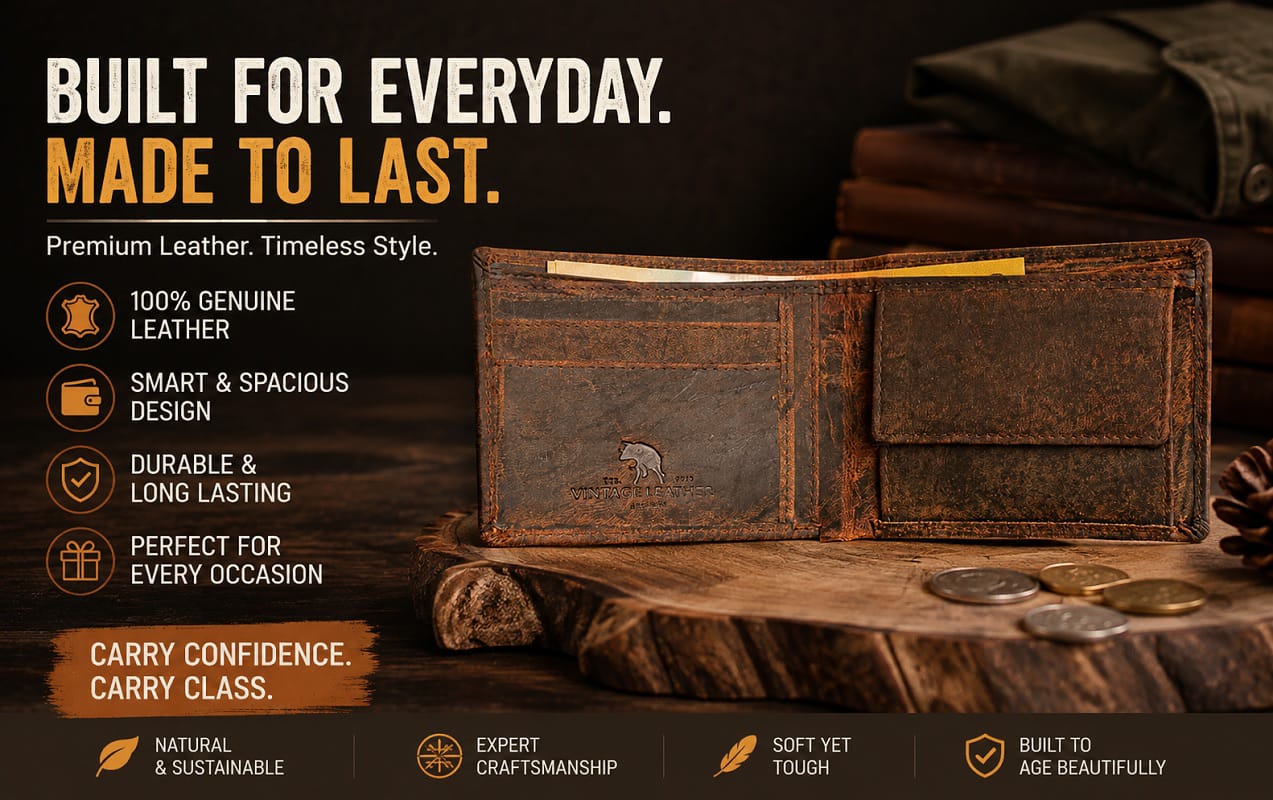
The Role of a Refined Accessory
A well-chosen accessory can quietly shape the way an outfit looks and feels. A leather wallet does more than carry cards and cash; it adds a sense of order, confidence, and personal style to everyday dressing. Unlike loud fashion pieces, it works in the background while still revealing attention to detail. Its texture, colour, shape, and finish can say a great deal about the person carrying it.
Modern menswear values useful pieces that look polished without appearing excessive. A wallet fits naturally into this approach because it combines function with understated character. Whether it rests in a trouser pocket during a workday or appears beside a watch and keys at dinner, it becomes part of a man’s daily uniform. The right design feels practical, comfortable, and naturally connected to his lifestyle.
Why Material Quality Matters
The material determines how a wallet feels in the hand, how it responds to daily use, and how long it maintains its structure. High-quality leather usually has a natural grain, a firm yet flexible feel, and a subtle surface variation that makes every piece distinctive. It should not feel overly plastic, thin, or artificially shiny. These details help separate a carefully made accessory from one designed only for short-term use.
Full-grain and top-grain leather are popular choices because they offer strength while developing greater character over time. As the wallet moves through daily life, contact with hands, pockets, and natural oils can create a soft patina. Small marks may appear, but they often become part of its identity rather than making it look worn out. This gradual change gives the accessory a personal history that synthetic materials rarely reproduce.
Choosing a Useful Wallet Shape
The best shape depends on what a person carries every day. A traditional bifold remains popular because it provides room for notes and cards while folding into a manageable size. A slim cardholder suits someone who mainly uses digital payments and carries only essential cards. Longer designs may work well for people who need additional space for receipts, travel documents, or several currencies.
A practical design should support movement rather than create discomfort. An overfilled wallet can distort clothing, strain stitching, and become unpleasant when sitting for long periods. Before choosing a style, consider the number of cards, amount of cash, and extra items usually carried. A wallet that matches these habits will remain useful, while an attractive design with the wrong capacity may quickly become frustrating.
Slim Design for Modern Living
Minimalism has become an important part of contemporary menswear. A thin profile creates a cleaner outline in jeans, tailored trousers, and lightweight jackets. It also encourages better organisation by making the user decide which cards and items are genuinely necessary. This balance between simplicity and usefulness is one reason compact wallets appeal to professionals, travellers, and style-conscious men.
Slim does not have to mean fragile or impractical. A carefully constructed wallet can remain compact while offering secure card slots, a folded cash section, and carefully placed seams. The goal is not to remove every useful feature but to avoid unnecessary layers and decoration. A streamlined design feels especially appropriate for men who prefer clothing with neat silhouettes and subtle detailing.
Craftsmanship Seen in the Details
Craftsmanship is often visible in the features that are easiest to overlook. Even stitching, smooth edges, accurate folds, and secure card slots suggest that the wallet was made with patience and control. Reinforced stress points can help prevent separation where the material receives the most pressure. A clean interior is equally important because rough lining or unfinished edges can damage cards and reduce comfort.
Hardware should also support the overall quality of the design. Snaps, zippers, clasps, and metal details need to open smoothly and remain firmly attached. Poor hardware can make a stylish wallet feel unreliable after only a short period of use. When every component works together, the result feels balanced, durable, and refined without needing prominent branding.
Colour and Personal Style
Colour plays a major role in how an accessory connects with a wardrobe. Black is a reliable choice for formal clothing, business suits, and monochrome outfits because it creates a sharp and discreet impression. Brown shades offer more warmth and often pair naturally with denim, boots, chinos, and casual tailoring. Tan and cognac tones can bring out the natural grain while adding a relaxed vintage quality.
The best colour is usually one that works with the clothing and accessories already being worn. A wallet does not need to match a belt or pair of shoes perfectly, but similar tones can create a thoughtful appearance. Darker colours may hide marks more easily, while lighter shades show the development of the material more clearly. Personal preference should guide the decision, especially when the item will be used every day.
Organisation without Unnecessary Bulk
A good interior layout makes daily routines faster and less stressful. Cards should slide into their slots without excessive force, yet they should remain secure when the wallet is turned or carried. A full-length cash compartment can be useful for keeping notes neat, while a compact central section may suit people who rarely carry cash. Every compartment should have a clear purpose rather than simply adding volume.
The habit of carrying too much can reduce the life of any wallet. Old receipts, expired cards, loose coins, and rarely used membership cards gradually stretch the structure. Regularly removing unnecessary items keeps the shape flatter and makes important belongings easier to find. Good organisation is therefore not only a design feature; it is also a simple daily practice that protects the accessory.
Protection for Everyday Carry
Daily belongings deserve thoughtful protection, particularly when they include identification and payment cards. Some modern designs include RFID-blocking layers intended to reduce the risk of unauthorised wireless scanning. This feature may be useful for travellers and people who regularly move through crowded public areas. It should complement, rather than replace, sensible habits such as monitoring accounts and keeping cards secure.
A protective wallet should still remain comfortable and easy to use. Thick shielding layers can sometimes increase bulk, so it is worth checking whether the feature fits the way the wallet will be carried. Look for a design that protects essentials while maintaining a natural shape. Security is most effective when it does not make the user abandon the wallet’s practical layout or leave it overstuffed.
Matching Wallets with Occasions
Different settings may call for different levels of formality. A simple black bifold can sit comfortably beside a suit, polished shoes, and a structured briefcase. A weathered brown design may feel more suitable with a casual jacket, rugged boots, or weekend denim. A compact cardholder can work well for evenings when only a few essentials are needed.
This versatility makes a leather wallet a valuable part of a complete wardrobe. It can move from professional meetings to casual lunches without looking out of place. The key is to choose a finish that reflects the wearer’s usual clothing instead of following a short-lived trend. Subtle design tends to remain attractive because it adapts to changing outfits and occasions.
Caring for Long-Term Character
Proper care helps preserve both the appearance and structure of the material. Keep the wallet away from excessive moisture, direct heat, and prolonged sunlight, as these conditions can cause drying, fading, or distortion. If it becomes damp, allow it to dry naturally at room temperature rather than using a hairdryer or placing it near a heater. Gentle handling prevents small problems from becoming permanent damage.
Cleaning should be light and infrequent unless the maker recommends a specific product. A soft, dry cloth can remove surface dust, while a suitable conditioner may help maintain flexibility when the material begins to feel dry. Avoid filling every compartment beyond its intended capacity. With sensible care, a leather wallet can become softer, richer, and more distinctive while continuing to perform its everyday role.
A Signature of Everyday Taste
Menswear is often defined by small choices rather than dramatic statements. The fabric of a shirt, the shape of a shoe, the finish of a belt, and the condition of a wallet all contribute to the impression a man creates. An accessory that is well-made and thoughtfully chosen shows that style is being considered even when no one is looking. That quiet consistency gives an outfit a stronger sense of confidence.
The most successful design is one that feels natural from the first day and becomes more personal with use. It should hold what is needed, fit comfortably into a pocket, and complement both relaxed and formal clothing. When material, construction, colour, and proportion work together, the wallet becomes more than a storage item. It becomes a dependable part of modern menswear, carrying daily essentials while reflecting the owner’s taste.