

Key Takeaways
• Prioritise a functional layout that respects the unique dimensions of your condominium.
• Select furniture pieces that offer both aesthetic appeal and practical storage solutions.
• Layer your lighting to create a versatile atmosphere for various times of the day.
• Incorporate vertical design elements to make the ceiling appear higher and the room more spacious.
Introduction
Mastering the art of condo interior design often feels like a daunting task when you are faced with a blank canvas and limited floor area. The living room serves as the heart of the home, acting as a social hub for guests and a private sanctuary for relaxation after a long day. Achieving a balance between high-end aesthetics and daily functionality requires a strategic approach that considers every square inch of the property. Whether you are moving into a brand-new unit or refreshing an older space, starting from scratch allows you to build a cohesive vision that reflects your personal style while maintaining the value of the home.
Analysing the Architectural Canvas
Every successful condo interior design project begins with a deep understanding of the floor plan, including the location of load-bearing walls, windows, and electrical outlets. In many Singaporean condominiums, the living area might be narrow or share space with the dining zone, necessitating a clear plan for traffic flow. By identifying the focal point of the room, you can build a layout that feels intentional rather than cluttered.
Selecting Scale-Appropriate Furniture
One of the most common mistakes in condo living room interior design is choosing furniture that is either too large or too small for the space. Oversized sofas can swallow a room, making it feel cramped and difficult to navigate, while tiny pieces might leave the area looking disjointed. Modular sofas are excellent options because they offer the flexibility to reconfigure the seating based on your needs. When selecting your core pieces, focus on high-quality materials that stand the test of time and provide a neutral foundation for more vibrant accessories.
Harnessing the Power of Vertical Space
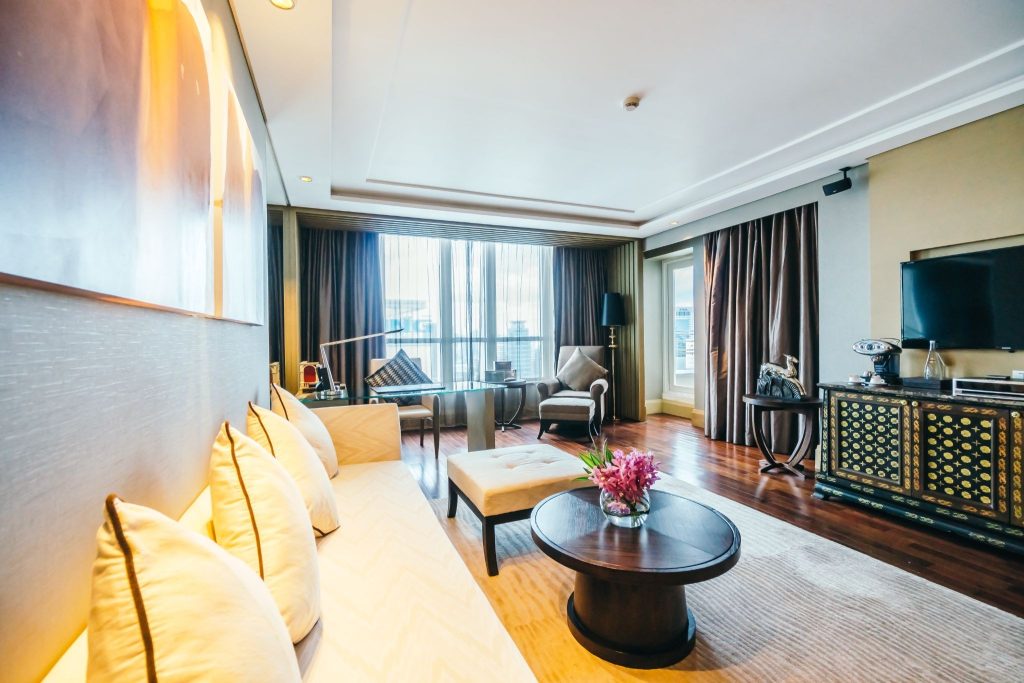
Verticality helps to draw the eye toward the ceiling, making the room feel significantly more expansive than it actually is. You can achieve this by installing floor-to-ceiling shelving units or using tall, slim floor lamps that emphasise height. Floor-to-ceiling curtains are another professional trick; hanging them higher than the window frame creates a sense of grandeur and helps to soften the architectural lines of the room.
Layering Light for Ambience and Function
Relying solely on a single overhead light can make a room feel flat and clinical. Instead, aim for a layered lighting scheme that includes ambient, task, and accent lights. Use dimmable ceiling lights for general illumination, elegant floor lamps for reading nooks, and LED strips to highlight shelving or art. In smaller condos, well-placed mirrors can amplify both natural and artificial light, reflecting brightness back into the room and making dark corners disappear.
Defining Zones Without Physical Barriers
A key challenge in condo interior design is defining these different zones without using heavy walls that block light and airflow. Area rugs are incredibly effective tools for anchoring a seating arrangement and visually separating it from the dining space. You can also use furniture placement, such as the back of a sofa or a low-profile console table, to act as a subtle divider.
Choosing a Cohesive Colour Palette
The colours you choose will dictate the energy of your home, so it is vital to select a palette that promotes harmony. For a sophisticated condo living room interior design, many experts recommend a base of neutral tones. These shades reflect light and provide a versatile backdrop that allows you to swap out cushions, throws, and artwork as trends change. If you want to introduce bolder colours, do so through accent pieces or a single feature wall.
Curating Personal Accents and Art
While it is tempting to fill every shelf with trinkets, a minimalist approach often yields better results in a condominium setting. Select a few meaningful statement pieces, such as a large-scale painting or a unique sculpture, to serve as conversation starters. Greenery is also a fantastic addition, as indoor plants breathe life into the room and provide a natural contrast to the sleek lines of modern architecture.
Conclusion
Transforming a condominium living area into a masterpiece requires a blend of spatial awareness, furniture scaling, and creative lighting. By focusing on vertical space and defining clear zones, you can overcome the challenges of a smaller footprint and create a home that feels both luxurious and liveable. Whether you are starting from scratch or refining an existing space, these principles provide the roadmap to a successful and beautiful interior.
Enquire at The Hoft Collective today to discover how expert design can elevate your condominium lifestyle through tailored solutions and creative vision.
