

Do you remember what video calls looked like ten years ago? The pixelated faces, the lagging audio, and the constant “Can you hear me now?” moments were enough to make anyone dread a remote meeting. It wasn’t that long ago, but in the world of technology, it feels like a lifetime.
Communication has evolved rapidly, and the tools we use to connect have had to keep pace. We’ve moved from simple telephone lines to complex digital ecosystems that require high-fidelity performance. As remote work, virtual learning, and digital entertainment have become staples of modern life, the demand for better quality has skyrocketed. Today, modern Audio Video Solutions are not just about connecting us; they are about immersing us in the experience, ensuring that every word is heard and every image is seen with crystal clarity.
The Quest for Crystal-Clear Sound
Audio is often the unsung hero of communication. You can tolerate a slightly blurry video, but if the sound cuts out or is distorted, the conversation is effectively over. Recent innovations have focused heavily on eliminating the barriers between the speaker and the listener.
One of the most significant advancements is intelligent noise cancellation. This isn’t just about blocking out the hum of an air conditioner. Modern algorithms can distinguish between a human voice and background chatter, typing sounds, or even a barking dog, filtering them out in real-time. This ensures that the person on the other end hears you, not your environment.
Then there is the rise of spatial audio. This technology mimics how we hear sound in the real world—directionally. In a virtual meeting or a classroom, spatial audio can make voices sound like they are coming from specific locations on the screen. It creates a more natural, less fatiguing listening experience, allowing our brains to process information the way they were designed to.
Visuals That Rival Reality
While audio sets the stage, visuals provide the context. The grainy, washed-out screens of the past are being replaced by displays that offer startling realism. The push for 4K and even 8K resolution has brought a level of detail that was previously reserved for high-end cinema.
High Dynamic Range (HDR) technology has also played a pivotal role. HDR allows for a broader range of colors and greater contrast between the darkest blacks and the brightest whites. For a graphic designer sharing a portfolio or a doctor reviewing a medical scan remotely, this color accuracy is not just a luxury; it’s a necessity.
These improvements in Audio Video Solutions mean that non-verbal cues—a raised eyebrow, a slight nod, a subtle smile—are no longer lost in transmission. We are reclaiming the human element of digital communication, making virtual interactions feel almost as personal as being in the same room.
Innovations in Action
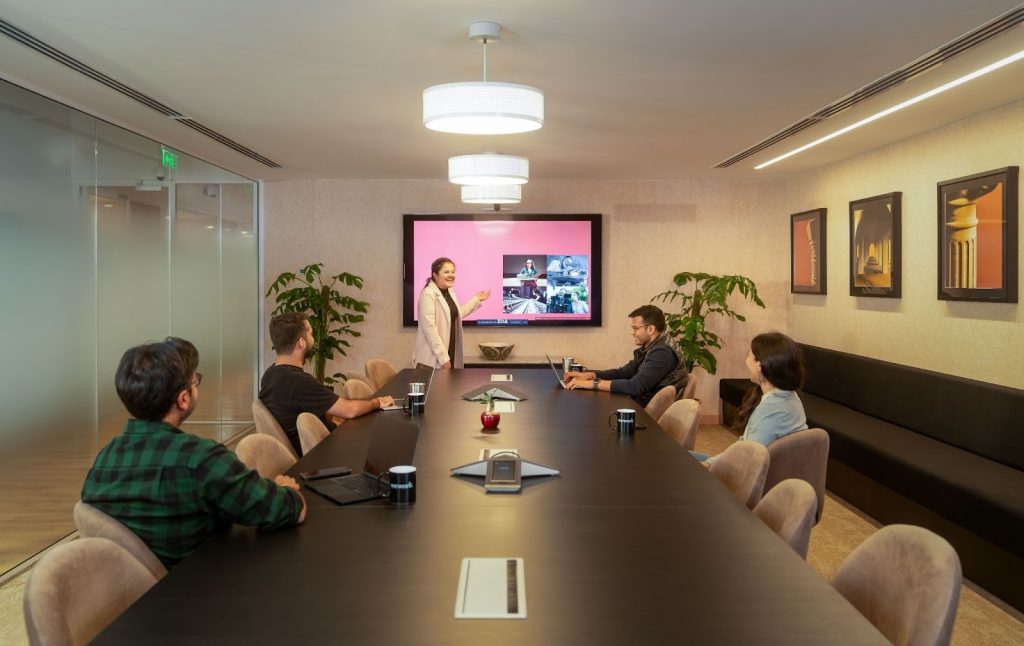
These technologies are transforming everyday spaces. In the corporate world, “huddle rooms” equipped with wide-angle cameras and beamforming microphones allow small teams to collaborate seamlessly with remote colleagues. The camera automatically frames the active speaker, while the mics pick up voices from anywhere in the room without capturing the echo.
In education, hybrid classrooms use smart displays and robust sound systems to ensure remote students don’t feel like second-class citizens. They can see the whiteboard clearly and hear the teacher’s instructions without straining, keeping them engaged and on par with their in-person peers.
Even in healthcare, telemedicine relies on these sharp visuals and clear audio to conduct remote diagnoses, bringing specialized care to patients who might otherwise struggle to access it.
The Future of Connection
The leap in quality we see today is just the beginning. As Audio Video Solutions continue to integrate AI and faster connectivity speeds, the line between physical and digital presence will blur even further.
Investing in high-quality AV isn’t just about buying new gadgets; it’s about investing in the quality of our relationships and the clarity of our ideas. When we remove the friction of bad tech, we make room for better conversation, deeper learning, and more meaningful connection.
