

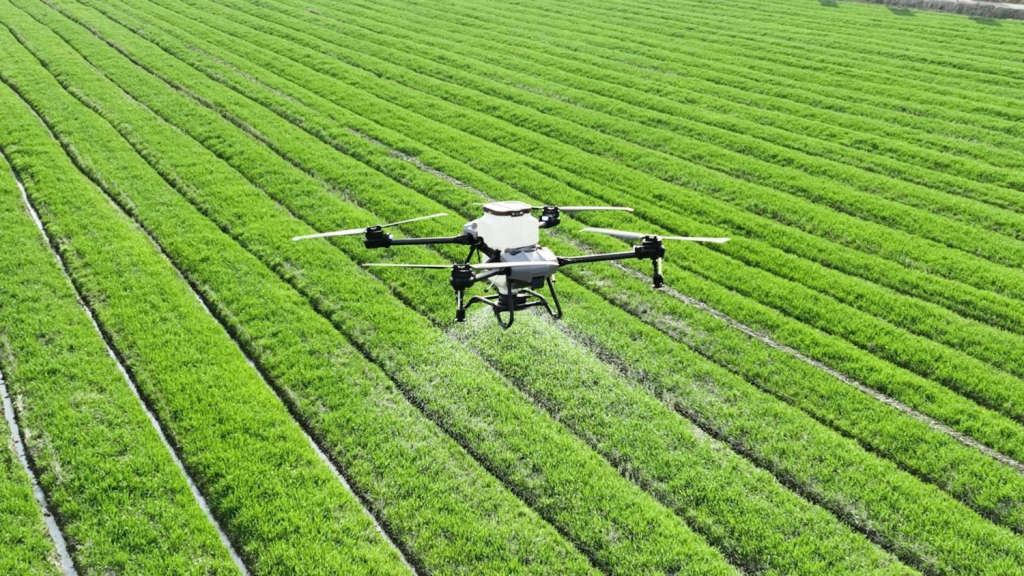
Farming is no longer just about tractors, plows, and early mornings.
With the global population expected to reach 9.7 billion by 2050, agriculture must become smarter and more efficient than ever.
Enter drone technology, a rapidly evolving tool that’s transforming how farmers manage crops, monitor land, conserve resources, and reduce costs. But purchasing and managing drones can be prohibitive, especially for small and medium farms.
That’s where Drone as a Service (DaaS) comes in, a subscription-style model that gives farmers on-demand access to cutting-edge aerial capabilities without owning the hardware.
This Drone Service Guide explores how DaaS is reshaping agriculture by making operations more efficient, cost-effective, and sustainable, all while keeping tech simple and accessible.
The Rise Of Drones In Modern Agriculture
A quick glance at the agriculture sector shows a strong push toward technology adoption to meet rising demand with limited resources.
Drones, small unmanned aerial vehicles equipped with sensors and spray systems are uniquely positioned to help farmers manage vast fields with precision and speed.
What Is Drone As A Service (DaaS) In Agriculture
Instead of a farmer buying and maintaining drones which can cost thousands of dollars, Drone as a Service allows professionals to send drones wherever and whenever needed.
Farmers pay for specific services such as aerial imaging, crop health analysis, or precision spraying.
This model removes the barrier of upfront investment and maintenance while delivering professional insights and applications.
Drones: Adoption Trends And Scale In Farming
Drone usage in agriculture is growing rapidly as the benefits become clearer.
For example, in India and other parts of the world, drones have slashed water use by up to 90% during spray operations for crops like ragi and pigeon pea, while improving yields by up to 10% in some cases.
How Drone Services Improve Farming Efficiency
Farmers have long struggled with manual inputs, long inspection times, and uneven application of water and chemicals. Drones change this by delivering high-resolution data and targeted applications quickly and accurately.
Faster, Smarter Crop Monitoring
Traditional scouting on foot or with vehicles is slow. Drones fly over fields to collect multispectral and thermal imagery that shows crop health, water stress, and pest problems long before they’re visible to the naked eye.
This rapid visibility enables farmers to act sooner, saving time and protecting yields.
Precision Resource Application
One of the most significant advantages of drones is precision, applying fertilizers, pesticides, and water exactly where needed.
Studies suggest that drones can reduce input costs (fertilizer and pesticide use) by 20-30%, leading to direct savings in expenses.
Precision application not only cuts costs but also minimizes environmental impact by restricting chemicals to problem areas.
Timely Action During Critical Growth Phases
Crop conditions can change rapidly. Manual monitoring might miss critical windows for intervention, but drones can capture up-to-date data frequently (weekly or even daily during peak periods) to ensure that farmers don’t lose out on potential gains.
Cost-Effectiveness Of Drone Services Versus Traditional Methods
Drones shine not just in efficiency, but in cost savings and financial sustainability for farms big and small.
Avoid Upfront Hardware Costs
High-end agricultural drones can cost from a few thousand to tens of thousands of dollars, depending on payload and sensors.
For many farmers, especially smallholders, owning this equipment outright is prohibitively expensive, especially when considering training, maintenance, and regulatory compliance.
Drone as a Service eliminates these barriers by shifting the investment to service providers.
Lower Operational And Labor Costs
Precision spraying and automated monitoring mean heavy machinery and field workers are less in demand.
Drones have been shown to reduce labor needs for spraying operations compared to traditional methods, addressing rising labor costs and shortages.
This translates into real financial savings.
For example, spray jobs that took multiple workers hours or days can be completed by a drone in a fraction of that time, freeing up labor for more skilled tasks and lowering wage bills.
Shorter Cost Recovery Period
When farmers or cooperatives use drones via service contracts, the financial benefit often begins immediately through lowered input costs, reduced labor, and fewer equipment breakdowns.
Many operations see return-on-investment impacts depending on scale and crop type.
Real-World Applications: Case Studies And Use Cases
Drone services aren’t just theoretical, concrete examples show measurable results on farms.
Water Savings And Yield Improvements
As mentioned earlier, pilots in Karnataka reported up to 90% reduction in water use for spraying agrochemicals by switching to drones, alongside measurable yield increases for key crops like ragi and tur dal.
This type of water savings is especially crucial in drought-prone regions or areas where irrigation costs are high.
Broad Coverage And Rapid Response
In other operational settings, drones can cover up to 50 acres per day, dramatically more than manual field teams, meaning farmers can ensure consistent coverage across large operations.
Enabling this level of reach via service providers means even farms without drone hardware can benefit.
Challenges And Considerations In Adopting Drone Services
Despite clear benefits, transitioning to drone-enabled farming through services involves some challenges.
Technical And Training Barriers
Drones require trained operators and data analysts.
When using service providers, much of this burden shifts to the provider, but farmers still need basic understanding to interpret and act on results.
Access And Infrastructure Issues
Service delivery can be limited in remote areas due to travel logistics and charging or drone storage requirements.
Network connectivity for data transfer and processing also matters for timely insights.
Regulatory Compliance
Agricultural drone operations are governed by aviation rules, and service providers must adhere to licensing for chemical applications and flight operations.
These standards ensure safety but can also introduce complexity for providers and users alike.
Future Trends In Drone-Assisted Farming
The evolution of drone technology and services continues, offering even greater promise ahead.
AI And Data Analytics Integration
Future services will increasingly tie drone imagery to AI and machine learning platforms, allowing predictive insights which weed patches will spread next season, or which soil zones are most nutrient-deficient.
Swarm Operations And IoT Integration
Multiple drones operating together, connected to Internet of Things (IoT) sensors on the ground, offer a comprehensive and automated farm management system with minimal human oversight.
Supportive Policy And Subsidy Growth
Governments in many regions now promote drone adoption through subsidies, training programs, and pilot initiatives, which reduce costs to farmers and expand service viability.
Conclusion
Agriculture is entering a new era defined by data, efficiency, and sustainability.
Drone as a Service, outlined throughout this Drone Service Guide offers a practical way for farms of all sizes to leverage the power of drones without the burden of ownership.
From dramatic reductions in input waste and water use to improved crop monitoring and labor savings, drone services deliver measurable value in today’s competitive agricultural landscape.
As technology continues to mature and integrate with AI, IoT, and data analytics, the opportunities for cost-effective and efficient farming will only grow stronger.
If you’re a farmer looking to modernize without heavy investment, Drone as a Service might just be your next strategic move toward smarter, sustainable farming.
