

Why This Question Matters in 100G Network Deployments
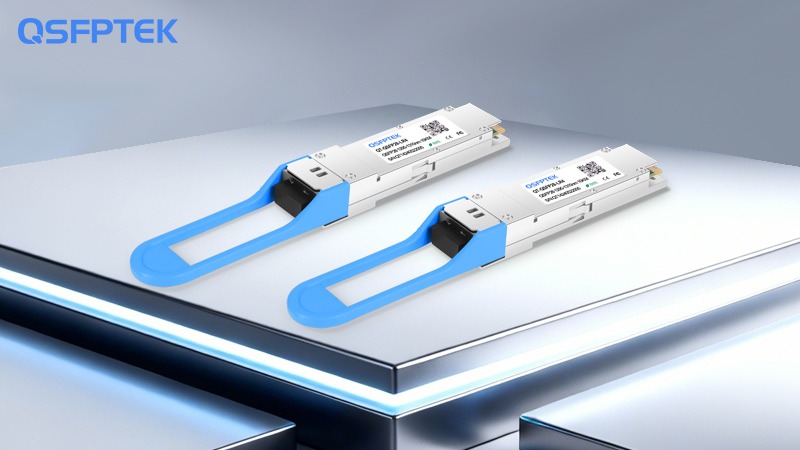
In modern 100G network deployments, especially across data centers and enterprise backbone infrastructures, it is increasingly common to encounter mixed optical environments. As networks evolve over time, operators often find themselves managing links that include both LR4 and CWDM4 modules. This raises a practical and important question: can a 100GBASE-LR4 QSFP28 1310nm 10km LC duplex SMF DDM optical transceiver module directly replace a CWDM4 module in real deployments? The answer is not always straightforward, as it depends on multiple technical and operational factors, including transmission distance, fiber type, optical budget, and overall network design strategy.
Understanding the Differences Between LR4 and CWDM4
Transmission Technology and Wavelength Design
The fundamental difference between LR4 and CWDM4 lies in how they transmit optical signals over single-mode fiber. LR4 modules use four wavelengths based on LAN-WDM technology, typically operating around the 1310nm window with tightly spaced wavelengths. This design allows for higher signal integrity over longer distances. In contrast, CWDM4 modules use coarse wavelength division multiplexing, spreading four wavelengths across a wider spectrum. While this reduces cost and complexity, it also limits performance in terms of reach and signal stability over longer distances.
Transmission Distance and Optical Budget
One of the most significant distinctions is transmission distance. LR4 modules are designed for up to 10km transmission over single-mode fiber, making them suitable for longer interconnects such as campus networks or metro edge scenarios. CWDM4 modules, on the other hand, typically support distances of up to 2km. This difference is directly tied to the optical budget of each module, where LR4 provides a higher margin to compensate for fiber attenuation and insertion loss, ensuring more reliable performance over extended links.
Connector Type and Infrastructure Compatibility
Another key difference is the physical interface. LR4 modules use LC duplex connectors, while CWDM4 modules commonly rely on MPO/MTP connectors. This means that replacing CWDM4 with LR4 is not just a matter of swapping modules; it may also require changes in fiber infrastructure. Networks built around MPO cabling systems may face additional costs and complexity when transitioning to LC-based connections.
Can LR4 Directly Replace CWDM4?
Compatibility Considerations in Existing Links
In real deployments, direct replacement is rarely plug-and-play. Although both LR4 and CWDM4 are 100G QSFP28 modules, they are not interoperable at the optical level due to differences in wavelength schemes and signaling methods. This means that an LR4 module cannot communicate directly with a CWDM4 module on the opposite end of the link. For a successful replacement, both ends of the link must use the same type of module, which may require coordinated upgrades across devices.
Impact on Cabling and Network Architecture
Replacing CWDM4 with LR4 often involves rethinking the cabling infrastructure. Since LR4 uses LC duplex single-mode fiber, any existing MPO-based cabling must either be replaced or adapted using breakout or conversion solutions. This can introduce additional insertion loss or management complexity if not carefully planned. Therefore, while LR4 can functionally replace CWDM4, the transition is not always seamless and may involve significant infrastructure adjustments.
When Does It Make Sense to Replace CWDM4 with LR4?
Long-Distance Requirements Beyond 2km
One of the most compelling reasons to replace CWDM4 with LR4 is when transmission distance requirements exceed 2km. In such cases, CWDM4 simply cannot meet the performance demands, while LR4 provides the necessary reach and reliability. This is particularly relevant for inter-building connections, campus networks, and certain metro access scenarios where longer fiber runs are unavoidable.
Improving Link Stability and Signal Margin
LR4 modules offer a higher optical budget, which translates into better tolerance for link impairments such as fiber aging, connector contamination, and patch panel losses. In environments where link stability is critical, upgrading to LR4 can reduce the risk of intermittent failures and improve overall network reliability. This makes LR4 a strong candidate for mission-critical applications where consistent performance is essential.
Simplifying Fiber Management in Some Scenarios
Although MPO-based CWDM4 deployments can be efficient in high-density environments, they can also introduce complexity in terms of polarity management and cleaning requirements. In some cases, transitioning to LC duplex connections with LR4 modules can simplify fiber management, especially in smaller-scale or less densely populated networks. This can lead to easier maintenance and reduced operational overhead.
When CWDM4 Remains the Better Choice
Cost-Sensitive Short-Reach Deployments
Despite the advantages of LR4, CWDM4 remains a cost-effective solution for short-reach applications within 2km. Its simpler design and lower component cost make it an attractive option for large-scale data center deployments where distance is not a limiting factor. Replacing CWDM4 with LR4 in such scenarios may not provide sufficient return on investment.
High-Density Data Center Environments
CWDM4 modules, with their MPO interfaces, are well-suited for high-density cabling systems commonly found in hyperscale data centers. These environments often rely on structured cabling with pre-terminated MPO trunks, enabling efficient scaling and rapid deployment. Switching to LR4 in these cases could disrupt the existing architecture and reduce port density efficiency.
Final Thoughts: Replacement or Complement?
In real deployments, the question is not simply whether 100G QSFP28 LR4 can replace CWDM4, but whether it should. While LR4 offers clear advantages in terms of transmission distance, optical budget, and link stability, it is not a universal replacement. Differences in wavelength technology, connector types, and infrastructure requirements mean that replacing CWDM4 with LR4 often involves more than just swapping modules.
In practice, LR4 and CWDM4 are better viewed as complementary solutions rather than direct substitutes. LR4 excels in longer-distance and high-reliability scenarios, while CWDM4 remains ideal for short-reach, high-density, and cost-sensitive deployments. By understanding their respective strengths and limitations, network designers can make informed decisions that align with both current needs and future scalability.
