

Lipstick formulas have changed considerably from the basic wax-and-pigment sticks many people grew up using. Today, shoppers can choose between liquid mattes, creamy bullets, high-shine finishes, plant-based formulas and lipsticks inspired by Ayurveda. That variety can also make labels confusing.
An Ayurvedic lipstick is often presented as a more ingredient-conscious alternative to conventional lipstick. Both are cosmetic products designed to add colour to the lips. What changes is the choice of base ingredients, supporting botanicals, texture and formulation philosophy.
Key Takeaways
- Ayurvedic lipstick typically combines modern cosmetic ingredients with plant oils, herbal extracts or traditional Ayurvedic ingredients.
- “Ayurvedic” does not automatically mean vegan, allergy-free or safer for everyone.
- Pigmentation, finish and staying power depend on the complete formulation, not only on whether the lipstick is herbal or conventional.
- Checking the ingredient list, finish, shade suitability and personal sensitivities is more useful than choosing based on labels alone.
What Does “Ayurvedic Lipstick” Actually Mean?
In modern beauty, Ayurvedic lipstick generally refers to a lipstick formulated with ingredients traditionally associated with Ayurveda, such as herbal extracts, plant oils, ghee or botanical waxes.
That does not mean the lipstick is made only from crushed herbs. A lipstick still needs pigments, structuring materials and ingredients that help it spread evenly, retain its shape and stay on the lips.
Some modern Ayurvedic formulations therefore combine traditional ingredients with contemporary cosmetic technology.
Just Herbs’ Herb Enriched Ayurvedic Lipstick range is one example. Its creamy-matte bullet formula uses ghee and sesame oil along with herbs such as Brahmi, Shatavari, Guduchi, Yashtimadhu, Bala and Manjishtha. The range is available in shades developed with Indian skin tones in mind.
India’s cosmetic regulations still treat lipstick as a cosmetic product. Cosmetics sold in the country must comply with applicable quality and safety requirements, irrespective of whether their marketing describes them as herbal, Ayurvedic or conventional.
Ayurvedic Lipstick vs Regular Lipstick: Where Does the Difference Lie?
1. The Base of the Formula May Be Different
Traditional lipstick is generally made by combining colour pigments with oils, waxes, emollients and texturising ingredients. The precise mix varies significantly between brands.
Some conventional formulas use mineral oils, paraffin-derived materials, silicones or synthetic waxes because these ingredients can provide slip, stability and a predictable finish.
An Ayurvedic-inspired formula may instead give greater prominence to plant oils, herbal extracts, natural waxes or ingredients such as ghee.
In Just Herbs’ Ayurvedic bullet lipstick, for instance, ghee and sesame oil form an important part of the formulation. The product also contains organic beeswax, which means this particular lipstick is not vegan. That detail is worth checking because “natural” or “Ayurvedic” should not be assumed to mean vegan.
2. Ayurvedic Lipsticks Often Include Herbal Ingredients
The most obvious distinction is the use of botanicals associated with traditional Ayurvedic care.
Depending on the formulation, these may include:
- Brahmi
- Manjishtha
- Shatavari
- Yashtimadhu or liquorice
- Guduchi
- Bala
- Sesame oil
- Almond oil
Their presence does not turn lipstick into a medical treatment. Rather, they form part of the cosmetic formula and may be combined with emollient ingredients intended to make the product comfortable to wear.
Does Ayurvedic Lipstick Feel Different on the Lips?
Bullet lipsticks containing oils and emollients often have a creamier glide. Just Herbs describes its herb-enriched bullet lipstick as a weightless creamy-matte formula containing ghee and sesame oil for moisture support.
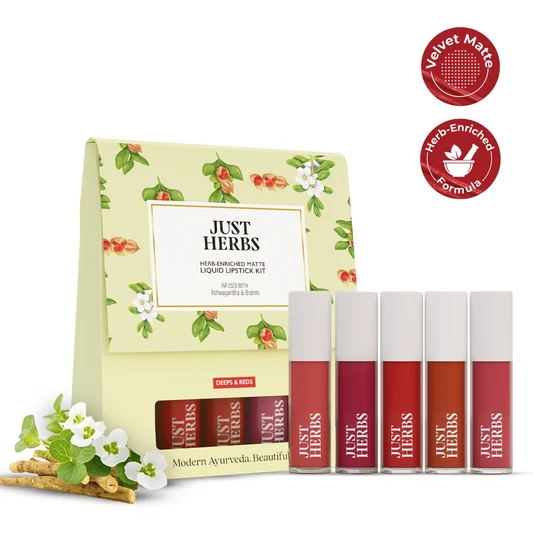
Modern ranges also include liquid mattes. Just Herbs, for example, offers a Herb Enriched Matte Liquid Lipstick formulated with Cica, liquorice and sweet almond oil. It is designed to produce a creamy-matte finish while reducing the dry, tight sensation sometimes associated with matte liquid formulas.
What About Pigmentation and Colour Payoff?
There is a persistent idea that herbal makeup must produce softer or less noticeable colour. Modern formulations do not necessarily work that way.
Lip colour comes largely from pigments and their concentration, dispersion and compatibility with the base. An Ayurvedic lipstick can therefore be richly pigmented just as a regular lipstick can.
- Creamy Matte
A creamy matte lipstick offers colour with a softer, less flat finish. It can be particularly useful for people who dislike the tight feeling of very dry matte formulas.
- Liquid Matte
Liquid lipstick generally sets more firmly and can offer greater resistance to transfer, although performance varies by product.
- Satin or Glossy Finishes
These prioritise shine and slip and may need more frequent reapplication after meals.
What Should You Check Before Buying an Ayurvedic Lipstick?
- Read Beyond the Front Label
Look at the actual ingredient list. A product calling itself Ayurvedic should make it reasonably clear which Ayurvedic or botanical ingredients it contains.
- Check Whether It Matches Your Finish Preference
Do not choose solely because the formula is herbal. Decide whether you prefer creamy matte, liquid matte, satin or another texture.
- Consider Your Lip Condition
If your lips are naturally dry, richer emollient formulas may feel more comfortable than very dry mattes. A lip balm underneath can also help, although too much balm may reduce wear time.
- Check Dietary and Lifestyle Preferences
Ayurvedic cosmetics are not automatically vegetarian or vegan. Just Herbs’ classic herb-enriched lipstick, for example, contains cow ghee and beeswax, while its Cica-infused liquid lipstick is marketed as vegan.
- Try Shades Against Your Actual Skin Tone
Lipstick can look very different in product photographs and on the lips. Undertone, natural lip pigmentation and lighting all affect the final result.
Mini lipstick kits can be practical here. Just Herbs offers miniature collections across browns, reds and pinks, allowing several shades to be tested before choosing a larger format.
Conclusion
Choose an Ayurvedic lipstick if you specifically value formulations that incorporate traditional botanical ingredients, plant oils or Ayurvedic-inspired bases alongside modern colour cosmetics.
Choose a conventional formula if its texture, shade, wear, ingredients and performance suit you better.
The smarter comparison is ultimately formula versus formula, not Ayurveda versus science. Modern Ayurvedic makeup itself uses cosmetic formulation science to turn traditional ingredients into wearable products.
Read the label, understand what the ingredients are doing and choose a lipstick that gives you the colour, comfort and finish you actually enjoy wearing.
