

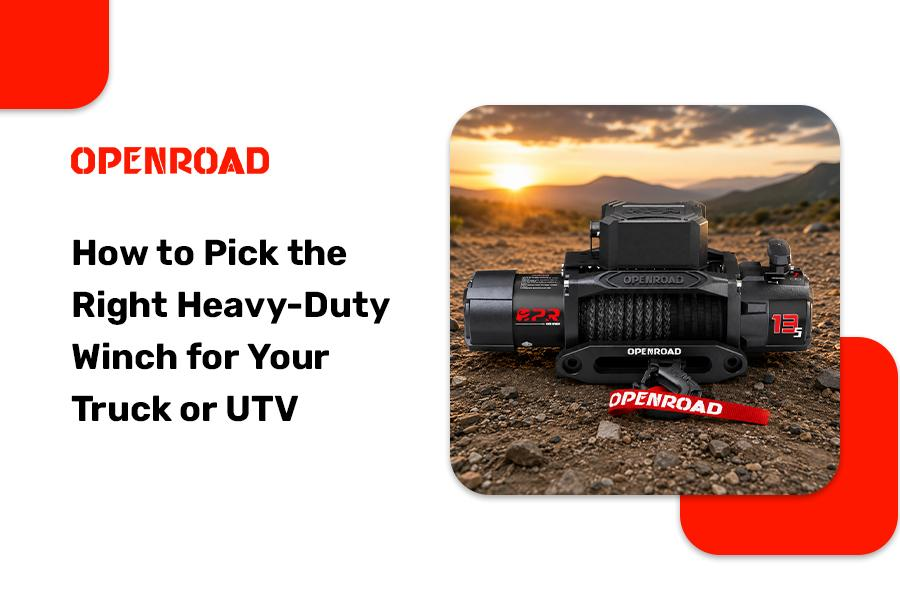
Backcountry travel needs planning, resilience, and gear. Getting trapped on dense woodland trails in a side-by-side or dragging equipment through deep muck in a full-sized pickup is rarely an issue of “if” but “when.” A dependable recovery strategy makes a scary situation manageable. Choosing the best mechanical pulling system requires matching vehicle dynamics to the surroundings. Let’s break down the selection process so you can get the right tool for your vehicle.
Demystifying the Math Behind Pulling Capacity
Understand weight ratings before looking at winches for sale. The greatest weight a winch can pull on a single line wrapped around the drum’s initial layer determines its capacity. Pulling force reduces as the line layers and coils around itself.
A unit with a weight capacity at least 1.5 times your rig’s GVWR is a usual industry recommendation. The GVWR includes the vehicle, a full tank of fuel, all passengers, aftermarket armor, tools, and cargo, not just the dry weight in your owner’s manual. If your car weighs 6,000 pounds loaded, you need a 9,000-pound pulling capacity.
However, rolling resistance and hydrostatic suction greatly increase the burden while hauling a car out of sticky mud or up a steep incline. Upgrade to a multiplier of 2.0 or 2.5 times your vehicle weight if you routinely navigate deep bogs to prevent motor overheating.
Choosing a Dedicated Winch for UTV and Side-by-Side Adventures
UTV recovery gear must be lightweight and durable. These cars feature smaller batteries and alternating current systems, making power management critical. Pulling capacity for a winch for a UTV ranges from 3,500 to 6,000 pounds.
A 4,500-pound unit keeps sport models’ front ends nimble and provides enough force to lift light machines out of tight spots. A 6,000-pound arrangement benefits larger, multi-passenger utility rigs with equipment or hunting gear. An IP68 waterproof grade protects electrical components and contactors from water damage on UTVs, which cross deep streams and muddy tracks.
Finding the Ultimate Heavy-Duty Winch for Full-Sized Trucks
Big work trucks, overlanding rigs, and hefty towing vehicles need different power. A typical heavy-duty winch for mid-to-full-sized vehicles pulls 10,000 to 13,500 pounds.
10,000 lbs: Ideal for mid-sized vehicles and lighter trail rigs that need standard recovery without weight.

12,000 lbs: Half-ton pickups and overlanding builds with thick camper shells or steel bumpers thrive here.
13,500 lbs: The best for three-quarter-ton utility trucks, large diesel engines, and steep slope recovery.
Here, 6.0–6.6 horsepower series-wound engines are essential. They produce continuous torque through three-stage planetary gear sets without draining your electrical system.
Line Options When Browsing Truck Winches for Sale
One of the key decisions when shopping for truck winches is between steel cable and synthetic rope. Different materials shine differently.
Synthetic rope is ideal for trail safety and vehicle agility. Steel cable is durable enough for dragging lines over sharp rocks or rough utility tasks.
Reliable Truck and Jeep Winch Mounting Options
Equipment mounting is as vital as the motor. Truck winches come in three main styles:
Integrated Bumper Mounts
Aftermarket steel or aluminum bumpers have secure, hidden mounting plates. This protects the unit from trail debris and aligns the pulling force with the truck frame rails.
Hidden Factory Mounts
Hidden installation kits hide the mounting plate under the OEM bumper on many current trucks. A lower grille aperture makes the fairlead accessible while maintaining an unobtrusive appearance.
Multiple-Mount Receiver Cradles
A receiver cradle mounts the unit on a hitch plate that slots into your front or rear 2-inch receiver hitch. This lets you relocate the tool to the vehicle’s neediest end or store it safely in the cab.
Intelligent Features of Modern Winch Truck Winch Systems
Modern recovery systems go beyond toggle switches. Choose a high-quality winch truck winch configuration with safety and ease-of-use features. Wireless remote controllers let you observe the recovery line pull from a safe distance, frequently up to 50 feet away.
Another important feature is reliable sealing. The motor and control box should have an IP68 rating to withstand submersion in water when you need them most. On steep slopes, the drum’s efficient automatic braking mechanisms prevent line slippage and secure your car.
Choosing the Best Recovery Tool
Calculating vehicle weight, terrain, and line material is key to picking the correct recovery gear. The premium recovery collection from [OPENROAD](https://openroad4wd.com/collections/truck-trailer-winch) offers high-performance Panther Series solutions to handle any terrain obstacle. Take time to assess your vehicle’s architecture, determine the right capacity, and hit the trails ready to handle anything.
