

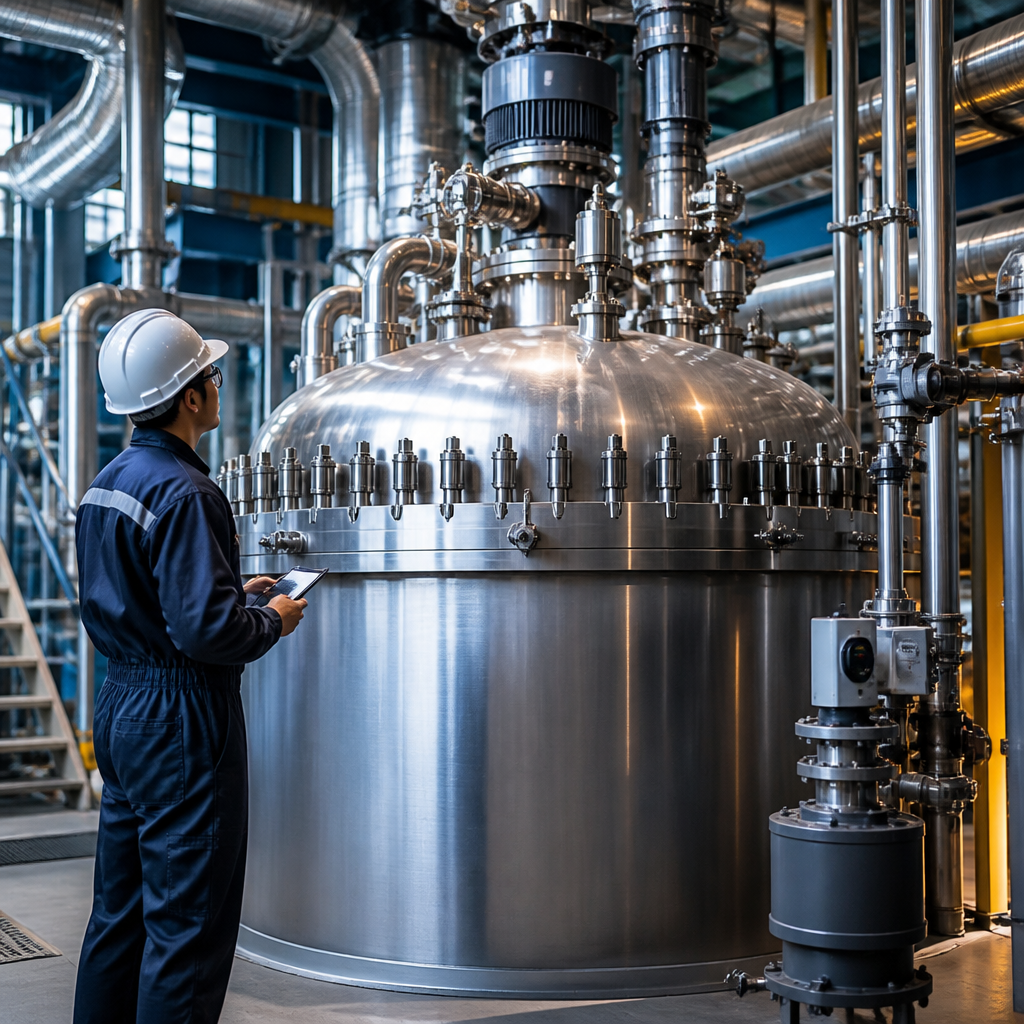
In the world of industrial manufacturing and chemical processing, thermal management is not a secondary concern — it is the backbone of safe, consistent, and scalable production. Whether you are producing specialty chemicals, pharmaceutical compounds, or food-grade ingredients, the ability to precisely control temperature within a reactor vessel determines product quality, reaction yield, and operational safety. At the center of this challenge lies one of the most critical engineering components in any process plant: the reactor jacket and its heat transfer system.
Why Thermal Control Defines Process Success
Temperature regulation during chemical reactions is not simply about keeping things warm or cool. It is about maintaining precise thermal conditions that allow reactions to proceed at the correct rate, without runaway exotherms, unwanted byproducts, or degradation of sensitive materials. A poorly designed or mismatched jacket system can result in hot spots, inconsistent batch quality, extended cycle times, and in worst-case scenarios, dangerous pressure events.
This is why engineers and plant designers invest significant effort in selecting the right jacket configuration for each application. The choice between a conventional jacket, a half-pipe jacket, a dimple jacket, or an internal coil system depends on a wide range of variables — including the viscosity of the process fluid, the required heat flux, the operating pressure, and the nature of the reaction itself.
Understanding Jacket Types and Their Functional Differences
Conventional Jackets
The conventional or plain jacket is the most widely recognized design. It consists of an outer shell that surrounds the reactor vessel, creating an annular space through which a heat transfer fluid — typically water, steam, thermal oil, or glycol — circulates. While this design is straightforward to fabricate and easy to clean externally, it can suffer from poor fluid distribution and low velocity, which reduces the overall heat transfer coefficient. For low-viscosity fluids and moderate heat duties, however, it remains a practical and cost-effective solution.
Half-Pipe and Dimple Jackets
Half-pipe jackets are constructed by welding half-sections of pipe in a helical pattern around the outside of the vessel. This design significantly increases the velocity of the heat transfer fluid, improving the film coefficient and overall thermal efficiency. Dimple jackets, on the other hand, use a pattern of spot welds and embossed dimples to create a turbulent flow path across the vessel wall. Both designs are particularly well-suited to high-pressure utility fluids and applications requiring rapid temperature changes.
Internal Coils and Combination Systems
For highly viscous materials or reactions requiring very high heat transfer rates, internal coils may be added inside the reactor vessel itself. These coils increase the total heat transfer surface area without enlarging the vessel footprint. In some advanced configurations, engineers combine an external jacket with internal coils to achieve maximum thermal control across a wide range of operating conditions.
The Role of Heat Transfer Fluids and Utility Systems
Selecting the right jacket design is only half the equation. The performance of any reactor jacket system is equally dependent on the utility infrastructure that supplies and circulates the heat transfer fluid. Flow rate, inlet temperature, pressure drop across the jacket, and the thermal properties of the fluid all directly influence how effectively heat is added to or removed from the process. According to IFT’s comprehensive guide on understanding plant utilities, the integration of heating and cooling systems with process equipment requires careful engineering to ensure reliability, energy efficiency, and regulatory compliance — particularly in food and pharmaceutical manufacturing environments.
Engineers must also account for the thermal lag inherent in large jacket volumes. When a rapid temperature change is required — such as during a quench step or a controlled exotherm — the jacket must respond quickly enough to prevent the reaction from overshooting its target temperature. This is where jacket design, fluid selection, and control system integration all converge into a single, interdependent challenge.
Matching Jacket Design to Application Requirements
One of the most common mistakes in process plant design is treating the reactor jacket as a standardized component rather than an application-specific engineering solution. A jacket that performs excellently in a low-viscosity polymerization reactor may be entirely inadequate for a high-viscosity adhesive or a crystallization process. The heat transfer area, the fluid velocity, the wall thickness, and the jacket geometry must all be calculated and validated against the specific thermal load of the intended process.
Understanding the full spectrum of available jacket configurations — and the engineering principles that govern their performance — is essential for any process engineer or plant manager responsible for reactor specification. Detailed technical resources on reactor jacket heat transfer provide engineers with the foundational knowledge needed to evaluate jacket options, calculate heat transfer coefficients, and make informed decisions that directly impact process efficiency and product quality.
Design Innovation and the Broader Engineering Community
The engineering community continues to push the boundaries of what is possible in thermal management and process equipment design. Cross-disciplinary innovation — drawing from fields as diverse as materials science, fluid dynamics, and digital manufacturing — is increasingly influencing how process plants are designed and optimized. Communities that celebrate engineering creativity and technical problem-solving, such as those featured in this interview exploring design and fabrication innovation, reflect a broader cultural shift toward precision craftsmanship and iterative improvement that resonates strongly with the process engineering world.
International Process Plants: A Trusted Resource for Reactor Equipment
International Process Plants has established itself as a leading authority in the sourcing, evaluation, and supply of used and refurbished process equipment. With decades of experience serving the chemical, pharmaceutical, food processing, and specialty materials industries, the company offers an extensive inventory of reactor vessels, heat exchangers, and associated process equipment. Their technical team brings deep expertise in evaluating the condition and suitability of reactor jacket systems for specific process applications, helping buyers make confident, well-informed purchasing decisions. For organizations seeking to expand or upgrade their process capabilities without the lead times and capital costs of new equipment, International Process Plants represents a reliable and knowledgeable partner.
Conclusion: Precision Engineering Starts with the Right Jacket
Reactor jacket design is far more than a mechanical detail — it is a fundamental engineering decision that shapes the performance, safety, and scalability of an entire process. From the selection of jacket geometry to the specification of heat transfer fluids and utility systems, every element must be carefully matched to the demands of the application. As industries continue to demand higher product quality, greater energy efficiency, and faster production cycles, the importance of getting reactor thermal management right will only grow. Engineers who invest the time to understand the principles behind jacket heat transfer will be better positioned to design processes that perform reliably from day one and adapt successfully as production requirements evolve.
