

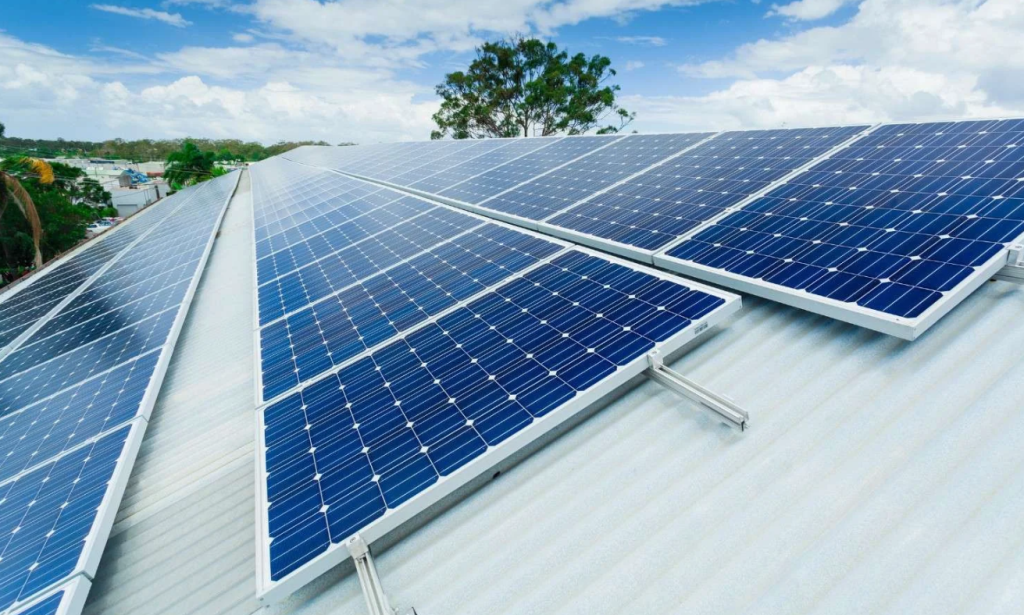
In any on grid solar system, protecting your solar equipment from electrical hazards is paramount. Imagine a high-output solar array providing optimal power to your home, only to be damaged by a lightning strike or unexpected voltage surge. Such events reduce system efficiency, shorten the lifespan of solar panels and inverters, and can even create safety hazards. With years of experience designing hybrid and on grid solar solutions, PowerDream understands that proper surge protection and grounding are not optional but fundamental to system safety, performance, and reliability.
On Grid Solar System Architecture and Its Impact on Protection Requirements
Understanding the layout of an on grid solar system is crucial before selecting surge protectors and grounding systems. A typical solar on grid system includes photovoltaic modules, a DC combiner box, an inverter, an AC switchboard, and grid connections. Each component presents the potential for overvoltage or electrical faults.
For example, DC surges may originate from lightning strikes on the photovoltaic array, while AC surges may arise from grid fluctuations. Properly installing surge protectors (SPDs) on the photovoltaic array, inverter inputs/outputs, and the main switchboard can mitigate these risks. The grounding path must account for both DC and AC currents to ensure fault currents are safely diverted.
Types of Surge Protectors for On Grid Solar System
Surge protectors for solar on grid system solar systems typically include Type 1, Type 2, and Type 3 surge protectors (SPDs), each with its specific application:
Type 1 Surge Protector: Installed at the inlet line to handle direct lightning strikes or high-energy surges from the grid.
Type 2 Surge Protector: Located at the switchboard or inverter input/output; used to handle residual surges and switching transients.
Type 3 Surge Protector: Provides basic protection for the terminals of sensitive electronic devices in a home or facility.
Selecting the appropriate surge protector type depends on the voltage and current ratings and the exposure risk of the grid-connected solar system. For grid-connected solar systems in areas with frequent thunderstorms, a multi-layered surge protector strategy combining multiple types is recommended. Using high-quality equipment from certified manufacturers ensures fast response and reliable surge suppression.
Grounding Fundamentals for On Grid Solar Systems
Adequate grounding stabilizes voltage and safely guides fault current. On grid solar systems typically require grounding at multiple points: the photovoltaic module frame, inverter chassis, and main AC switchboard. Proper grounding reduces potential differences, minimizing the risk of electric shock and preventing equipment damage.
The size of the grounding conductor should be determined in accordance with local electrical codes, and the conductor should be corrosion-resistant, especially for outdoor installations. Integrating grounding with a lightning protection system improves safety. For installers, following IEEE, NEC, or IEC guidelines ensures compliance and system lifespan, providing technical and regulatory assurance.
Integration of Surge Protection with Grounding Systems
Surge protectors (SPDs) perform best when used in conjunction with a well-designed grounding system. The effectiveness of surge suppression depends on the impedance of the grounding path; a low-impedance path allows transient currents to dissipate safely.
For on grid solar systems, coordinated selection of surge protectors (SPDs) includes:
Matching the SPD’s rated voltage to the system voltage.
Ensuring the maximum discharge current is compatible with the system.
Install the surge protector (SPD) close to the equipment it protects and minimize lead length.
Regularly check grounding continuity and SPD integrity to ensure continuous protection. Integrating monitoring capabilities into advanced systems can alert operators to SPD performance degradation, preventing unnoticed exposure to surge events.
Environmental and Installation Considerations
Outdoor solar arrays face environmental challenges such as UV radiation, humidity, extreme temperatures, and corrosion, which influence SPD and grounding system selection. SPDs should have weatherproof housings and be suitable for the local temperature range. Grounding rods and connectors must resist oxidation and maintain conductivity for decades.
Best installation practices include: separating DC and AC grounding paths where necessary; minimizing loop area to reduce electromagnetic interference; and avoiding shared paths that could compromise safety. Considering these factors ensures both short-term performance and long-term reliability for your grid-connected solar system.
Ensuring the Safety and Reliability of On Grid Solar Systems
Selecting appropriate surge protectors and grounding systems is crucial for the performance, safety, and lifespan of on grid solar systems. By understanding the system architecture, selecting appropriate surge protectors, designing effective grounding paths, and continuously maintaining systems, owners and businesses can protect their investments and ensure an uninterrupted supply of high-quality energy.
